
一个 LCT + 二分查找重心的做法。
题意
给定一个森林,支持以下操作:
A x y:连接 。Q x:查询点 所在树的重心。Xor:查询所有树的重心编号的异或和。
简化版题意:动态维护树重心。
题解
对于节点 ,维护 和 ,分别表示 总子树大小(包括虚边所连的节点)和 的虚儿子个数(认父不认子)。
对于连边操作,直接调用 LCT 的 操作即可,但为了维护上面两个量,可以先 后再更新。
维护重心需要两个性质:
-
以重心为根的最大的子树节点数小于总节点数的一半。
-
连接两棵树后,新的重心必定在两棵树原重心的路径上。
两个性质都可用反证法证,令 表示点 最大子树的大小。
对于性质 1,若 大于所有节点数的一半,则存在这颗子树中的一点 ,,所以重心必不是 ,假设不成立,性质 1 得证(这个很好理解,画图就看得出来)。
对于性质 2,设点 为原两棵树的重心,两棵树的大小分别为 , 若点 在 所在的树上且不在 到 的路径上,那么新增了一棵子树,必会让 增加 ,又因为性质 1,原先 ,所以连接另一棵树后 ,由性质 1 知 不是新树的重心,假设不成立,性质 2 得证。
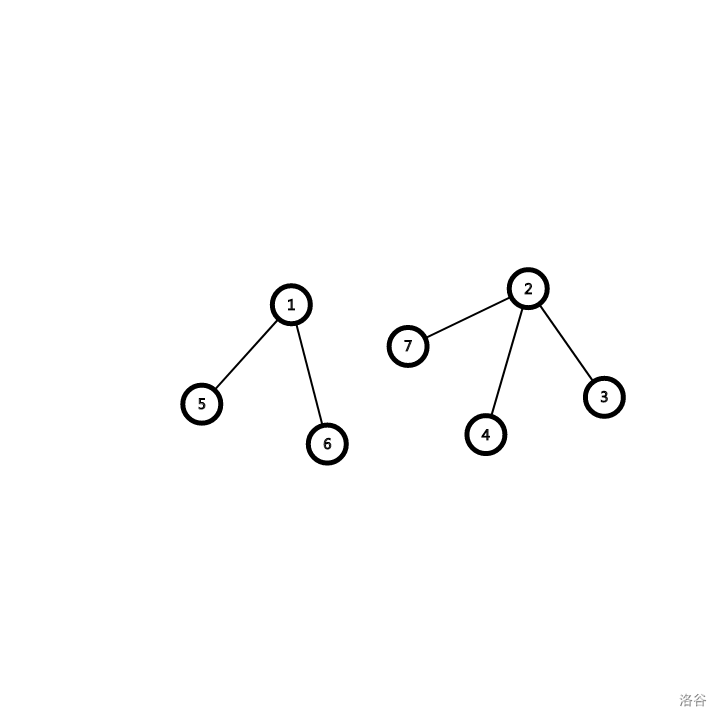
如图,两棵树重心分别是 和 。
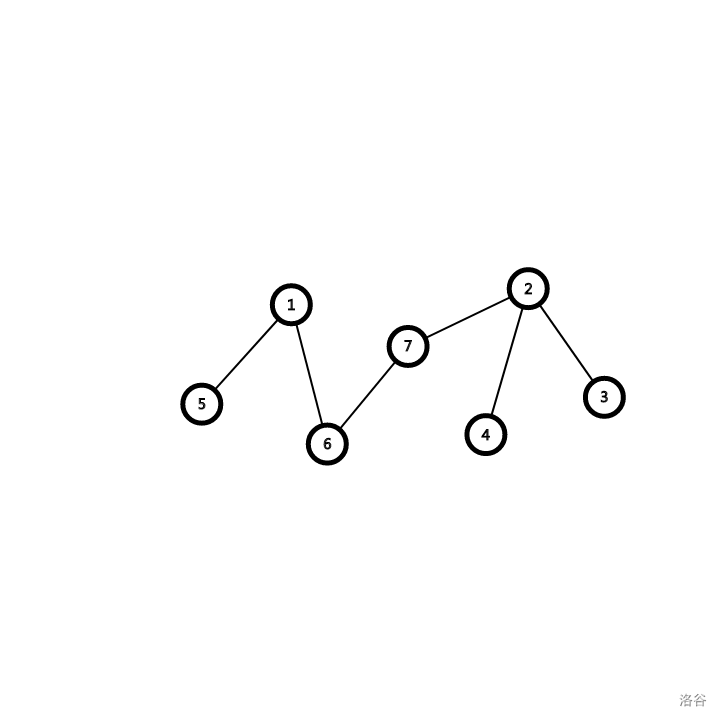
连接 后,对于不在两树重心上的 和 ,他们最大子树节点数必定增加,便不可能是重心。
为了方便处理,用重心来代表一棵树,再用并查集维护,每个点的并查集存所在树的重心,连边后就把原来两棵树重心 成一条链。对于链上的点 ,会把链分为两部分,用 维护 左右两边的子树和。然后根据比较左右儿子 和 的大小,选择子树较大的儿子,直到满足性质 1,再 保证复杂度。
需要注意,当树的大小为奇数时,只有一个重心,树的大小为偶数时可能会有多个重心,要找序号最小的。
具体细节看代码叭。
#include <bits/stdc++.h>
using namespace std;
const int N = 1e5 + 10;
struct Link_Cut_Tree {
	struct node {
		int fa, ch[2], siz, tot;
		bool tag;
	} t[N];
	bool nroot(int x) { return t[t[x].fa].ch[0] == x || t[t[x].fa].ch[1] == x; }
	void pushup(int x) { t[x].siz = t[t[x].ch[0]].siz + t[t[x].ch[1]].siz + 1 + t[x].tot; }
	void pushr(int x) {
		swap(t[x].ch[0], t[x].ch[1]);
		t[x].tag ^= 1;
	}
	void pushdown(int x) {
		if(!t[x].tag) return;
		if(t[x].ch[0]) pushr(t[x].ch[0]);
		if(t[x].ch[1]) pushr(t[x].ch[1]);
		t[x].tag = 0;
	}
	void pushdown_path(int x) {
		if(nroot(x))
			pushdown_path(t[x].fa);
		pushdown(x);
	}
	void rotate(int x) {
		int y = t[x].fa, z = t[y].fa, ych = t[y].ch[1] == x, w = t[x].ch[!ych];
		if(nroot(y)) t[z].ch[t[z].ch[1] == y] = x;
		t[x].ch[!ych] = y, t[y].ch[ych] = w;
		if(w) t[w].fa = y;
		t[y].fa = x, t[x].fa = z;
		pushup(y);
	}
	void splay(int x) {
		pushdown_path(x);
		int y;
		while(nroot(x)) {
			y = t[x].fa;
			if(nroot(y))
				rotate(t[y].ch[1] == x ^ t[t[y].fa].ch[1] == y ? x : y);
			rotate(x);
		}
		pushup(x);
	}
	void access(int x) {
		for(int y = 0; x; x = t[y = x].fa)
			splay(x), t[x].tot += t[t[x].ch[1]].siz - t[y].siz, t[x].ch[1] = y, pushup(x);
	}
	void makeroot(int x) {
		access(x);
		splay(x);
		pushr(x);
	}
	int findroot(int x) {
		access(x);
		splay(x);
		while(t[x].ch[0]) pushdown(x), x = t[x].ch[0];
		splay(x);
		return x;
	}
	void split(int x, int y) {
		makeroot(x);
		access(y);
		splay(y);
	}
	void link(int x, int y) {
		split(x, y);
		t[t[x].fa = y].tot += t[x].siz;
		pushup(y);
	}
	int dfs(int x) {
		int lsum = 0, rsum = 0, sum = t[x].siz >> 1, bre = t[x].siz & 1, u = 1e9, curl, curr;
		for(;x;) {
			pushdown(x);
			curl = lsum + t[t[x].ch[0]].siz;
			curr = rsum + t[t[x].ch[1]].siz;
			if(curl <= sum && curr <= sum) {
				if(bre) {
					u = x;
					break;
				}
				u = min(u, x);
			}
			if(curl < curr) {
				lsum += t[t[x].ch[0]].siz + t[x].tot + 1;
				x = t[x].ch[1];
			}
			else {
				rsum += t[t[x].ch[1]].siz + t[x].tot + 1;
				x = t[x].ch[0];
			}
		}
		splay(u);
		return u;
	}
} LCT;
int n, m;
int fa[N], ans;
int find(int x) { return fa[x] == x ? x : fa[x] = find(fa[x]); }
int main() {
	scanf("%d%d", &n, &m);
	for(int i = 1; i <= n; i++)
		fa[i] = i, ans ^= i;
	char op[3];
	int x, y;
	while(m--) {
		scanf("%s", op);
		if(op[0] == 'A') {
			scanf("%d%d", &x, &y);
			LCT.link(x, y);
			x = find(x), y = find(y);
			LCT.split(x, y);
			int g = LCT.dfs(y);
			ans ^= x ^ y ^ g;
			fa[x] = fa[y] = fa[g] = g;
		}
		else if(op[0] == 'Q') {
			scanf("%d", &x);
			printf("%d\n", find(x));
		}
		else printf("%d\n", ans);
	}
	return 0;
}
这道题挺难理解的,最好是自己可以画画图。