
最小生成树1.2
咱们先复习一下吧
树是什么?
树是n个点,n - 1条边,无环的图,比如


比如这个图
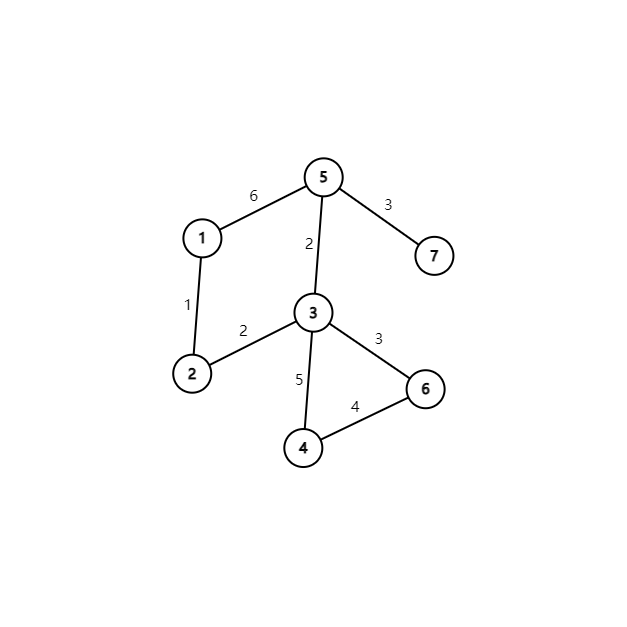
他的最小生成树是什么呢?
对了,就是这个↓
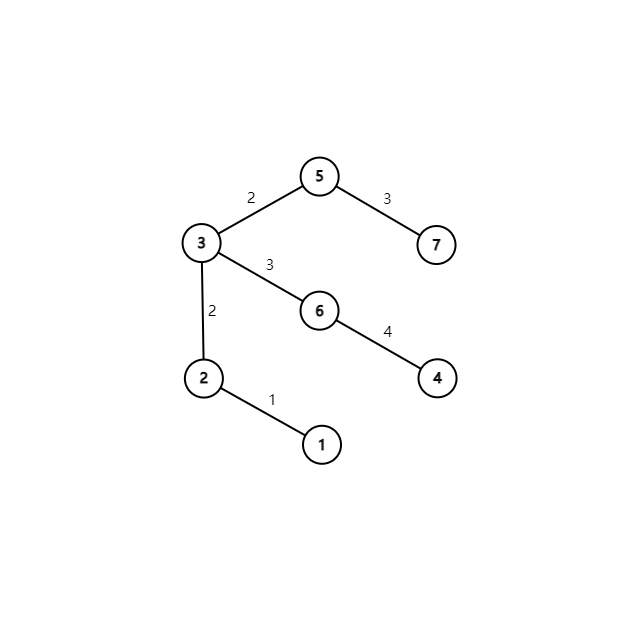
注:感谢yr409892525提供的图片
那么他是怎么来的呢? 很简单。 我们根据定义和方法求解。 这就用到了以下概念
生成树是什么?
给出一个无向带权连通的图,删掉一些边后变成了树。 这个过程就是生成树。
生成树并不唯一,删掉的边不同,构成的树也不同。
最小生成树是什么
最小生成树就是生成树中,边权值和最小的树。
So
我们的哪一个答案并不是很严谨的,那只是其中一种
言归正传
言归正传,我们还需要知道最小生成树一定是生成树,而生成树不一定是最小生成树( 等于没说 )
我们一般定义函数名叫做
Kruskal(当然,我用的不是)
使用算法:并查集、贪心 将每一条边按边权从小到大排列。 每次选当前最小边权的那条边。 如果这条边两点不连接,则连接这条边。
真正的挑战
不开玩笑了,上例题
P3366 【模板】最小生成树
简简单单的模板题目,不会有人不会吧
话不多说,上代码
#include<bits/stdc++.h>
using namespace std;
typedef long long ll;
const int N=105;
const int NN=3005;
const int NNN=200005;
int power(int a, int b);
int gcd(int x,int y);
int lcm(int x,int y);
int n,m,sum,ans,fa[NNN];
struct node{
	int x,y,z;
}a[NNN];
bool cmp(node x,node y){
	return x.z < y.z;
}
int find(int x){
	if(fa[x] == x){
		return x;
	}
	return fa[x] = find(fa[x]);
}
void dfs(){
	for(int i = 1; i <= m; i++){
		if(ans == n - 1){
			break;
		}
		int u = find(a[i].x), v = find(a[i].y);
		if(u != v){
			sum += a[i].z;
			ans ++;
			fa[u] = v;
		}
	}
	return ;
}
int main(){
	ios::sync_with_stdio(false);
	cin.tie(0);
	cout.tie(0);
	cin >> n >> m;
	for(int i = 1; i <= n; i++){
		fa[i] = i;
	}
	for(int i = 1; i <= m; i++){
		cin >> a[i].x >> a[i].y >> a[i].z;
	}
	sort(a + 1, a + m + 1, cmp);
	dfs();
	if(ans == n - 1){
		cout << sum;
	}else{
		cout << "orz";
	}
	return 0;
}
int power(int a, int b){int ans = 1, aa = a;while(b){if(b & 1){ans *= aa;}aa *= aa;b >>= 1;}return ans;}
int gcd(int x,int y){if(y == 0){return x;} return gcd(y, x % y);}
int lcm(int x,int y){return x * y / gcd(x,y);}
P1195 口袋的天空
我们知道树 n 个点只有n −1n−1 条边。 那么每连接一条边就会减少一个连通快个数。 所以用 sum 记录当前连通块个数,初始为 n 。 使用最小生成树,每建立一条边,连通块个数减一。 当连通块个数为 k 时,当前边权和为答案。
话不多说,上代码
#include<bits/stdc++.h>
using namespace std;
typedef long long ll;
const int N=105;
const int NN=3005;
const int NNN=200005;
int power(int a, int b);
int gcd(int x,int y);
int lcm(int x,int y);
int n,m,sum,ans,fa[NNN],k;
struct node{
	int x,y,z;
}a[NNN];
bool cmp(node x,node y){
	return x.z < y.z;
}
int find(int x){
	if(fa[x] == x){
		return x;
	}
	return fa[x] = find(fa[x]);
}
void dfs(){
	for(int i = 1; i <= n; i++){
		fa[i] = i;
	}
	for(int i = 1; i <= m; i++){
		if(find(a[i].x) != find(a[i].y)){
			int u = find(a[i].x), v = find(a[i].y);
			if(u != v){
				fa[u] = v;
			}
			sum --;
			ans += a[i].z;
			if(sum == k){
				return ;
			}
		}
	}
	return ;
}
int main(){
	ios::sync_with_stdio(false);
	cin.tie(0);
	cout.tie(0);
	cin >> n >> m >> k;
	for(int i = 1; i <= m; i++){
		cin >> a[i].x >> a[i].y >> a[i].z;
	}
	sort(a + 1, a + 1 + m, cmp);
	sum = n;
	dfs();
	if(sum == k){
		cout << ans;
	}else{
		cout << "No Answer\n";
	}
	return 0;
}
int power(int a, int b){int ans = 1, aa = a;while(b){if(b & 1){ans *= aa;}aa *= aa;b >>= 1;}return ans;}
int gcd(int x,int y){if(y == 0){return x;} return gcd(y, x % y);}
int lcm(int x,int y){return x * y / gcd(x,y);}
P1194 买礼物
按照 K i j建边,如果 K i j等于0,就建立 i 到 j 有边权为 A 的边。
再使用最小生成树。
统计边权和,再加上 A ,因为要从一个物品出发。 话不多说,上代码
#include<bits/stdc++.h>
using namespace std;
typedef long long ll;
const int N=105;
const int NN=3005;
const int NNN=200005;
int power(int a, int b);
int gcd(int x,int y);
int lcm(int x,int y);
int n,m,k,sum,ans,fa[NNN],k;
struct node{
	int x,y,z;
}a[NNN];
bool cmp(node x,node y){
	return x.z < y.z;
}
int find(int x){
	if(fa[x] == x){
		return x;
	}
	return fa[x] = find(fa[x]);
}
void dfs(){
	for(int i = 1; i <= n; i++){
		fa[i] = i;
	}
	for(int i = 1; i <= k; i++){
		if(find(a[i].x) != find(a[i].y)){
			sum += a[i].z;
			int u = find(a[i].x), v = find(a[i].y);
			if(u != v){
				fa[u] = v;
			}
		}
	}
	return ;
}
int main(){
	ios::sync_with_stdio(false);
	cin.tie(0);
	cout.tie(0);
	cin >> m >> n;
	for(int i = 1; i <= n; i++){
		for(int j = 1; j <= n; j++){
			int x;
			cin >> x;
			if(x > 0){
				a[++k] = {i, j, x};
			}
		}
	}
	for(int i = 1; i <= n; i++){
		a[++k] = {0, i, m};
	}
	sort(a + 1, a + 1 + k, cmp);
	dfs();
	cout << sum;
	return 0;
}
int power(int a, int b){int ans = 1, aa = a;while(b){if(b & 1){ans *= aa;}aa *= aa;b >>= 1;}return ans;}
int gcd(int x,int y){if(y == 0){return x;} return gcd(y, x % y);}
int lcm(int x,int y){return x * y / gcd(x,y);}
P2330 [SCOI2005] 繁忙的都市
题目里构成的树的名字叫做“瓶颈生成树”,可以证明最小生成树一定是瓶颈生成树,但反之不一定。
#include<bits/stdc++.h>
#define double long double
#define int long long
#define mem(x,n) memset(x, n, sizeof(x));
using namespace std;
typedef long long ll;
const int N=105;
const int NN=3005;
const int NNN=1000005;
const int im=INT_MAX;
const int MOD=1e9;
int power(int a, int b);
int gcd(int x,int y);
int lcm(int x,int y);
int fa[200005];
struct node{
	int x,y,z;
}a[200005];
int n,m;
int ans,sum;
bool cmp(node x,node y){
	return x.z < y.z;
}
int find(int x){
	if(x == fa[x]){
		return x;
	}
	return fa[x] = find(fa[x]);
}
void dfs(){
	for(int i = 1; i <= m; i++){
		if(ans == n - 1){
			break;
		}
		if(find(a[i].x) != find(a[i].y)){
			x = find(a[i].x);
			y = find(a[i].y);
			if(x != y){
				fa[x] = y;
			}
			sum = a[i].z;
			ans++;
		}
	}
}
signed main(){
	ios::sync_with_stdio(0);
	cin.tie(0);
	cout.tie(0);
	cin >> n >> m;
	for(int i = 1; i <= n; i++){
		fa[i] = i;
	}for(int i=1;i<=m;i++){
		cin >> a[i].x >> a[i].y >> a[i].z;
	}
	sort(a + 1,a + m + 1,cmp);
	dfs();
	cout << ans << " " << sum;
	return 0;
}
int power(int a, int b){int ans = 1, aa = a;while(b){if(b & 1){ans *= aa;ans %= MOD;}aa *= aa;aa %= MOD;b >>= 1;}return ans;}
int gcd(int x,int y){if(y == 0){return x;} return gcd(y, x % y);}
int lcm(int x,int y){return x * y / gcd(x,y);}
P2916 [USACO08NOV] Cheering up the Cow G
由于这题要加上对点权的处理,比较麻烦。
#include<bits/stdc++.h>
#define int long long
using namespace std;
typedef long long ll;
const int N=105;
const int NN=3005;
const int NNN=200005;
const int MOD = 1e9;
int power(int a, int b);
int gcd(int x,int y);
int lcm(int x,int y);
int n, m, d[NNN], ans, minn = 1e18;
int sum,fa[NNN];
struct node{
	int x,y,z;
}a[NNN];
bool cmp(node x,node y){
	return x.z < y.z;
}
int find(int x){
	if(fa[x] == x){
		return x;
	}
	return fa[x] = find(fa[x]);
}
void dfs(){
	for(int i = 1; i <= n; i++){
		fa[i] = i;
	}
	for(int i = 1; i <= m; i++){
		if(ans == n - 1){
			break;
		}
		int u = find(a[i].x), v = find(a[i].y);
		if(u != v){
			fa[u] = v;
			sum += a[i].z;
			ans ++;
		}
	}
	return ;
}
signed main(){
	ios::sync_with_stdio(false);
	cin.tie(0);
	cout.tie(0);
	cin >> n >> m;
	for(int i = 1; i <= n; i++){
		cin >> d[i];
		minn = min(minn, d[i]);
	}
	for(int i = 1; i <= m; i++){
		int x, y, z;
		cin >> x >> y >> z;
		a[i] = {x, y, z * 2 + d[x] + d[y]};
	}
	sort(a + 1, a + 1 + m, cmp);
	dfs();
	cout << sum + minn;
	return 0;
}
[ABC328E] Modulo MST
由于n不是一般的小,咱们直接上DFS
#include<bits/stdc++.h>
#define int long long
using namespace std;
typedef long long ll;
const int N=105;
const int NN=3005;
const int NNN=200005;
const int MOD = 1e9;
int n, m, k, ans = 1e18;
int fa[NNN];
int v[NNN];
struct node{
	int x,y,z;
}a[NNN];
int find(int x){
	if(fa[x] == x){
		return x;
	}
	return fa[x] = find(fa[x]);
}
int check(){
	int sum = 0;
	for(int i = 1; i <= n; i++){
		fa[i] = i;
	}
	for(int i = 1; i < n; i++){
		int u = find(a[v[i]].x), vv = find(a[v[i]].y);
		if(u != vv){
			fa[u] = vv;
			sum += a[v[i]].z;
			sum %= k;
		}else{
			return 2e18;
		}
	}
	return sum % k;
}
void dfs(int st){
	if(st == n){
		ans = min(ans, check());
		return ;
	}
	for(int i = v[st - 1] + 1; i <= m; i++){
		v[st] = i;
		dfs(st + 1);
	}
}
signed main(){
	ios::sync_with_stdio(false);
	cin.tie(0);
	cout.tie(0);
	cin >> n >> m >> k;
	for(int i = 1; i <= m; i++){
		cin >> a[i].x >> a[i].y >> a[i].z;
	}
	dfs(1);
	cout << ans;
	return 0;
}
作业
P1547 [USACO05MAR] Out of Hay S