
更好的阅读体验:https://www.cnblogs.com/DreamsChaser/p/15272849.html
在一个数轴上有 个 和 个 .
每次操作可以把所有 同时向左或向右移动 个单位长度,当一个 遇到了一个 , 它就会溜走。所有 溜走之后停止操作。
求 从 溜走的方案数。两个方案不同,当且仅当存在至少一个 从不同的 溜走。
答案对 取模,
首先我们可以不管比最左边 还左边的 , 因为它一定从最左边 溜走,对答案没有影响。同理,我们也可以不管比最右边 还右边的 .
我们现在单独拎出一个 进行研究。我们发现只有改变他向左或向右的最大值的操作才对这个 有效果。所以我们如果把这个 向左和向右的最大值作为一个平面坐标的两维的话,它的初始值是 , 然后不断地向上、向右延伸。
其实所有 的曲线都长一个样对吧。
那一个 何时溜走呢?是不是当他碰到了一个 的时候。也就是说,我们设初始时第 个 距离离它最近的两边的 的距离分别是 . 然后这条曲线碰到 或 的时候它就推出历史的舞台了。
而且答案只取决于曲线先碰到 还是 .
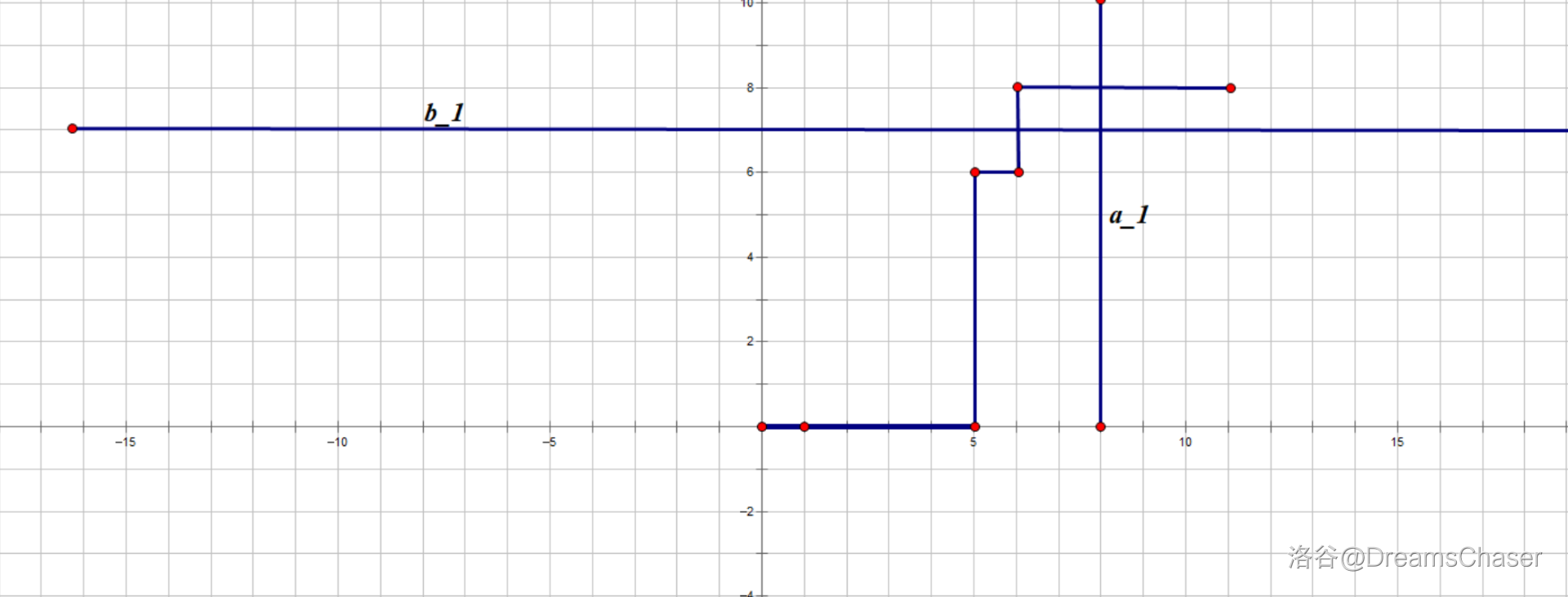
如果将 的左标定义为 . 那么所有在曲线左上方的 都会从左侧的 溜走,在曲线右下方的 都会从右侧的 溜走。
对于每个从右侧 溜走的 的集合, 容易构造出与之唯一对应的折线:
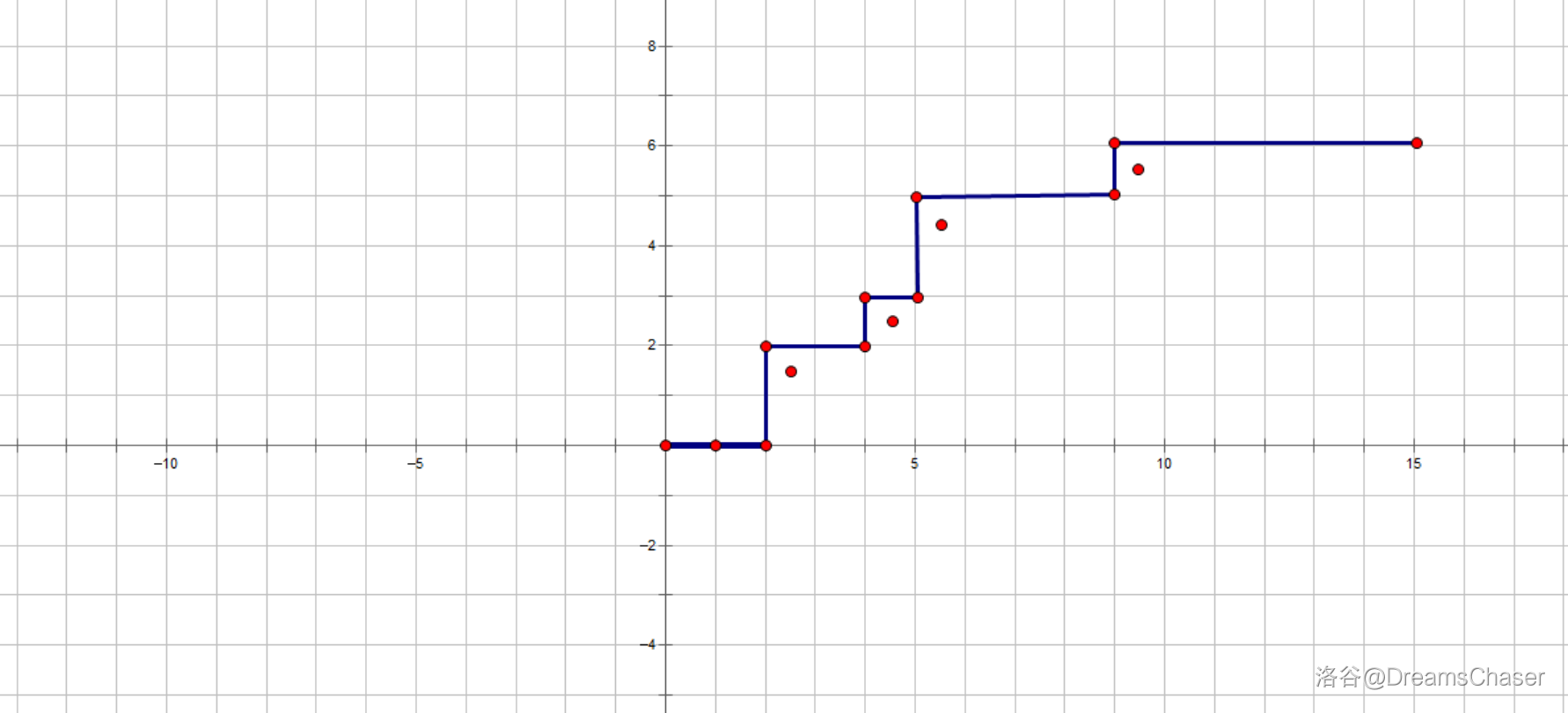
感性理解一下,就是卡在每个 (称为 )的直线。反之如果不能这样构造直线,我们也可以保证不存在直线使得这些 都在右下方。
那么方案数就等于这样的直线的个数。令 表示延伸到第 个机器人且这是个 . 转移方程显然:
然后这是一个 的转移式,显然是个二维偏序问题,用树状数组将其优化成 .
const int N = 100010, mod = 1000000007;

int n, m, a[N], b[N], Max, dc[N];
pair<int, int> node[N];

struct BIT // 树状数组
{
    int c[N];
    void add(reg int x, reg int d) {for (; x <= Max; x += (x & (-x))) c[x] = (c[x] + d) % mod;}
    int ask(reg int x) {reg int sum = 0; for (; x; x -= (x & (-x))) sum = (sum + c[x]) % mod; return sum;}
} S;

int main()
{
    scanf("%d %d", &n, &m);
    for (reg int i = 1; i <= n; ++ i) scanf("%d", &a[i]);
    for (reg int i = 1; i <= m; ++ i) scanf("%d", &b[i]);

    reg int tot = 0;
    for (reg int i = 1; i <= n; ++ i)
    {
        reg int pos = lower_bound(b + 1, b + m + 1, a[i]) - b;
        if (pos == 1 || pos > m) continue;
        node[ ++ tot] = make_pair(a[i] - b[pos - 1], - (b[pos] - a[i]));
        dc[tot] = -node[tot].second;
    }

    // 离散化

    sort(node + 1, node + tot + 1);
    for (reg int i = 1; i <= n; ++ i) node[i].second *= -1;
    sort(dc + 1, dc + tot + 1);
    Max = unique(dc + 1, dc + tot + 1) - dc;
    for (reg int i = 1; i <= tot; ++ i) node[i].second = lower_bound(dc + 1, dc + Max, node[i].second) - dc + 1;

    // DP

    S.add(1, 1);
    for (reg int i = 1; i <= tot; ++ i)
    {
        if (node[i].first == node[i - 1].first && node[i].second == node[i - 1].second) continue;
        reg int t = S.ask(node[i].second - 1);
        S.add(node[i].second, t);
    }

    printf("%d\n", S.ask(Max));

    return 0;
}