
说在前面
这题不是很难,对代码能力和思维能力的要求有点高。这里分享一种简单粗暴的做法。就是代码有点长(反正我代码挺长)。
题目分析
容易发现,如果相邻的两头奶牛形成了 的形式,那么这两头奶牛的奶量永远不会减少。如果有其他奶牛把牛奶传进来,那么奶量一定会减少。我们把样例三中的传递路径画出来,就是这样的:
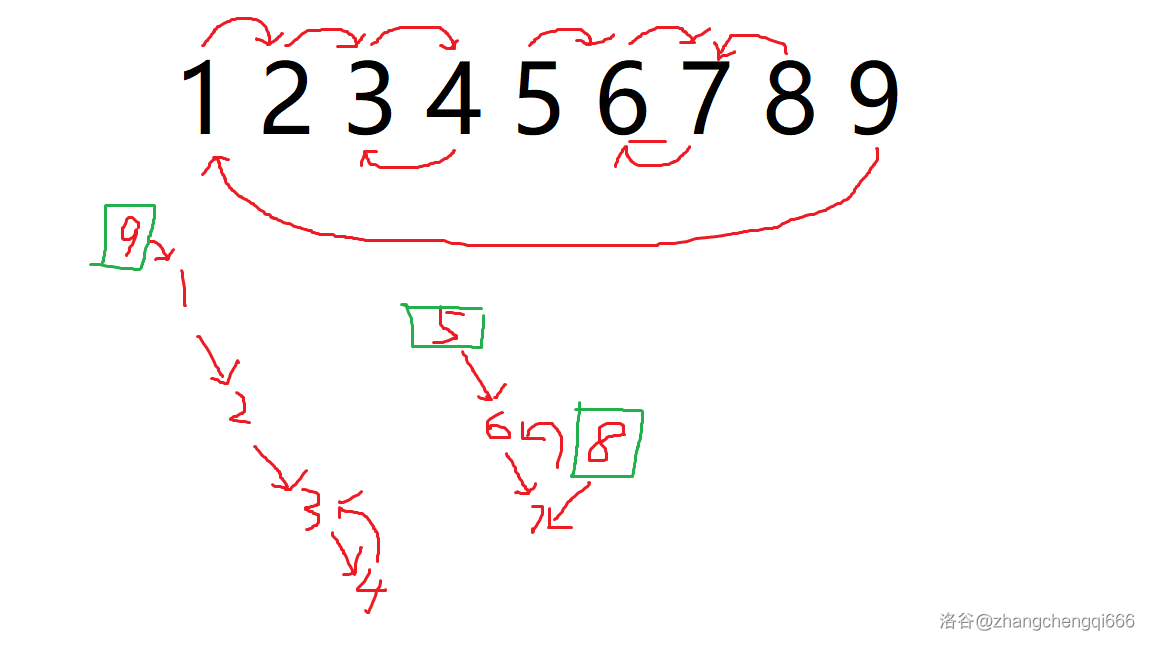
不难发现,用绿框框起来的奶牛奶量会减少。当绿框里的奶牛的牛奶消耗完后,会接着消耗它下面的一个结点的奶牛的牛奶,以此类推,直到这一条路径消耗完,下面的环不会被消耗。
具体点说,就是 最左边的节点和 最右边的结点的奶量会被消耗。
所以,思路来了:
- 以 作为块与块的分隔符,对序列进行分块。
- 把每个小块里面再分成 和 的小块,以它作为最终的块。
- 如果可以的话,首尾相连。
- 计算答案。
那答案怎么计算呢?
对于每个块,优先消耗它最左边或最右边的奶牛的牛奶,如果不够,就消耗下一头奶牛,直到这一块消耗完或时间结束。把每一个块消耗的总牛奶量加起来就是答案。
注意事项
- 这是一个环!!!
- 处理每个块时优先处理第一块(因为第一块最特殊,他是首尾相连的块)。
- 如果整体是一个大环,也不会消耗牛奶。
完整代码(真的有点长,165行)
#include <bits/stdc++.h>

#define int long long

using namespace std;

const int N = 200000 + 5;

int a[N], belong[N], st[N], ed[N];

int n, m, tot;

char x[N];

signed main() {
	cin >> n >> m;
	cin >> (x + 1);
	memset(st, 0x3f, sizeof st);
	int ans = 0;
	for (int i = 1; i <= n; i++) {
		cin >> a[i];
		ans += a[i];
	}
	int tmp = 0;
	if (x[1] == 'L' && x[n] == 'R') { // 因为是个环,判一下首尾是否能组成不会消耗牛奶的结构。
		tot++;
		tmp++;
	}
	int sta = tmp + 1, en = n - tmp, fr = 0x3f3f3f3f3f3f3f3f;
	for (int i = sta; i <= en; i++) {
		if (x[i] == 'R' && x[i + 1] == 'L') {
			tot++;
			i++;
			tmp++;
			continue;
		}
		if (x[i] != x[i - 1]) {
			++tot;
		}
		fr = min(fr, tot); // 记录第一个块
		belong[i] = tot; // 记录每一位所在的块的位置
	}
	if (n % 2 == 0 && tmp == n / 2) { // 如果全是不会消耗牛奶的结构
		cout << ans;
		return 0;
	}
	for (int i = 1; i <= n; i++) { // 记录块的起始与结束
		st[belong[i]] = min(st[belong[i]], i);
		ed[belong[i]] = max(ed[belong[i]], i);
	}
	if (tot == 1 && st[1] == 1 && ed[1] == n) { // 如果整体是一个大环
		cout << ans;
		return 0;
	}
	if (x[1] == x[n]) { // 首尾相连
		st[belong[1]] = st[belong[n]];
		for (int i = st[belong[n]]; i <= ed[belong[n]]; i++) {
			belong[i] = belong[1];
		}
		tot--;
	}
	if (x[st[fr]] == 'R') { // 处理第一块,因为是首尾相连,所以起始位置可能大于结束位置
		if (st[fr] > ed[fr]) {
			int t = m;
			bool flag = false;
			for (int i = st[fr]; i <= n; i++) { // 计算答案
				if (t > a[i]) {
					t -= a[i];
					ans -= a[i];
				} else {
					flag = true;
					ans -= t;
					break;
				}
			}
			if (!flag) {
				for (int i = 1; i <= ed[fr]; i++) {
					if (t > a[i]) {
						t -= a[i];
						ans -= a[i];
					} else {
						ans -= t;
						break;
					}
				}
			}
		} else {
			int t = m;
			for (int i = st[fr]; i <= ed[fr]; i++) {
				if (t > a[i]) {
					ans -= a[i];
					t -= a[i];
				} else {
					ans -= t;
					break;
				}
			}
		}
	} else {
		if (st[fr] > ed[fr]) {
			int t = m;
			bool flag = false;
			for (int i = ed[fr]; i >= 1; i--) {
				if (t > a[i]) {
					t -= a[i];
					ans -= a[i];
				} else {
					flag = true;
					ans -= t;
					break;
				}
			}
			if (!flag) {
				for (int i = n; i >= st[fr]; i--) {
					if (t > a[i]) {
						t -= a[i];
						ans -= a[i];
					} else {
						ans -= t;
						break;
					}
				}
			}
		} else {
			int t = m;
			for (int i = ed[fr]; i >= st[fr]; i--) {
				if (t > a[i]) {
					ans -= a[i];
					t -= a[i];
				} else {
					ans -= t;
					break;
				}
			}
		}
	}
	for (int i = fr + 1; i <= tot; i++) {
		if (st[i] == 0x3f3f3f3f3f3f3f3f || ed[i] == 0) continue; // 一定要注意这个地方,因为块的编号不是连续的,不加这句会 RE
		if (x[st[i]] == 'R') {
			int t = m;
			for (int j = st[i]; j <= ed[i]; j++) {
				if (t > a[j]) {
					ans -= a[j];
					t -= a[j];
				} else {
					ans -= t;
					break;
				}
			}
		} else {
			int t = m;
			for (int j = ed[i]; j >= st[i]; j--) {
				if (t > a[j]) {
					ans -= a[j];
					t -= a[j];
				} else {
					ans -= t;
					break;
				}
			}
		}
	}
	cout << ans;
	return 0;
}
注:后来发现不用这么麻烦,只需要把块内的的都加起来,直接用和去减就行了。
第二种代码(这下简单得多了)
#include <bits/stdc++.h>

#define int long long

using namespace std;

const int N = 200000 + 5;

int a[N], belong[N], st[N], ed[N], sum[N];

int n, m, tot;

char x[N];

signed main() {
	cin >> n >> m;
	cin >> (x + 1);
	memset(st, 0x3f, sizeof st);
	int ans = 0;
	for (int i = 1; i <= n; i++) {
		cin >> a[i];
		ans += a[i];
	}
	int tmp = 0;
	if (x[1] == 'L' && x[n] == 'R') { // 因为是个环,判一下首尾是否能组成不会消耗牛奶的结构。
		tot++;
		tmp++;
	}
	int sta = tmp + 1, en = n - tmp, fr = 0x3f3f3f3f3f3f3f3f;
	for (int i = sta; i <= en; i++) {
		if (x[i] == 'R' && x[i + 1] == 'L') {
			tot++;
			i++;
			tmp++;
			continue;
		}
		if (x[i] != x[i - 1]) {
			++tot;
		}
		fr = min(fr, tot); // 记录第一个块
		belong[i] = tot; // 记录每一位所在的块的位置
	}
	if (n % 2 == 0 && tmp == n / 2) { // 如果全是不会消耗牛奶的结构
		cout << ans;
		return 0;
	}
	for (int i = 1; i <= n; i++) { // 记录块的起始与结束
		st[belong[i]] = min(st[belong[i]], i);
		ed[belong[i]] = max(ed[belong[i]], i);
	}
	if (tot == 1 && st[1] == 1 && ed[1] == n) { // 如果整体是一个大环
		cout << ans;
		return 0;
	}
	if (x[1] == x[n]) { // 首尾相连
		st[belong[1]] = st[belong[n]];
		for (int i = st[belong[n]]; i <= ed[belong[n]]; i++) {
			belong[i] = belong[1];
		}
		tot--;
	}
	for (int i = 1; i <= n; i++) {
		sum[belong[i]] += a[i];
	}
	for (int i = 1; i <= tot; i++) {
		if (st[i] == 0x3f3f3f3f3f3f3f3f || ed[i] == 0) continue; // 一定要注意这个地方,因为块的编号不是连续的,不加这句会 RE
		ans -= min(sum[i], m);
	}
	cout << ans;
	return 0;
}
于是这篇简单粗暴又不失优雅的题解到此结束。
说在后面
果然,越粗暴的做法越复杂。(但是好理解,所以我选择粗暴的做法)
若题目或代码讲解有误,欢迎提出。