
前排谢罪:当时OEIS的时候没有注意到能够A掉这题的,然后在比赛主页放言“无O(EIS)”做法,这些都是本人的疏忽,导致了比赛秩序的混乱,给大家带来不便,特此深表歉意。。。
顺便
用这个式子做,单组数据时间复杂度。
(妄想拿这个?)
这个在时没有问题,但再往后就不对了。
比如,就在 时:
对应的图形:
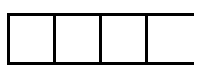
出来的答案是;
然而,最优的做法是:
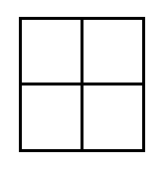
答案是。
实际上,我们知道,为了使答案最小,在围新的地块时,我们要尽可能地少用围墙。也就是说,新建的地块要和尽量多的旧地块相邻。
举例,当时,我们从的基础上开始看:
新的地块要和尽量多的旧地块相邻,因此我们不妨这样做:
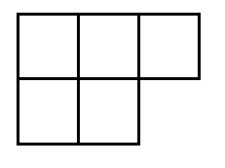
现在我们使用了条围墙;
新的地块要和尽量多的旧地块相邻(重要的事情说三遍),我们的下一步是:
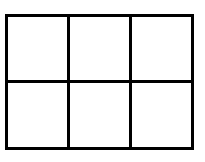
只再用条围墙便可新建一个地块。
同理,我们这样用掉剩下的条围墙:
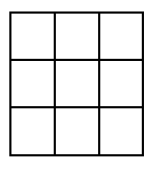
所以,当时,;
由此,我们可以轻松手推出的所有答案,单组数据时间复杂度。
不知道有没有做法。
(没想到比赛时没有人考虑这个,大家就跳过吧。。)
根据上面的理论,我们还能够发掘出这样的关系:
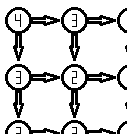
一张,地块的围建顺序在这张图上体现为拓扑序。
然而,想要尽可能地先占据需要围墙少的新地块,我们可以对这种图稍作处理:
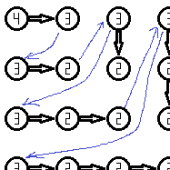
这样沿着图跑,到一个节点让减去上面的数,如果到第个点时了,那么答案就是;
至于这个图的大小,我们不妨假设是个完全平方数,那么所有的小正方形地块可以拼成一个的大正方形,此时满足。
可知,那么我们就开的数组来存储。
附代码:
(为阅读方便特意调整了代码,因为本人码风过于奇葩。。)
#include<cstdio>
#include<cmath>
#define LL long long
using namespace std;
const int MAXN = 1003;
LL m, n, val[MAXN][MAXN];
struct Pg
{
	int n, m;
	Pg(){}
	Pg(const int i, const int j)
	{
		n=i, m=j;
	}
};
Pg to[MAXN][MAXN];
//int ind[MAXN][MAXN];
void init(void){
	int i, j, k;
	val[1][1] = 4;
	to[1][1].n = 1;
	to[1][1].m = 2;
	for(i = 2; i <= n; ++i)
	{
		val[i][i] = 2;
		to[i][i] = Pg(1, i+1);
//		ind[i][i] = 2;
		for(j=2, k=i-2; j <= k; ++j)
		{
			val[i][j] = val[j][i] = 2;
			to[i][j] = Pg(i, j+1);
			to[j][i] = Pg(j+1, i);
//			ind[i][j] = ind[j][i] = 2;
		}
		val[i][i-1] = val[i-1][i] = 2;
		to[i][i-1] = Pg(i, i);
		to[i-1][i] = Pg(i, 1);
//		ind[i][i-1] = ind[i-1][i] = 2;
		val[i][1] = val[1][i] = 3;
		to[i][1] = Pg(i, 2);
		to[1][i] = Pg(2, i);
//		ind[i][1] = ind[1][i] = 1;
	}
	to[1][2] = Pg(2, 1);
}
int search()
{
	Pg t;
	int i, j, r, ans;
	for(i=1, j=1, r=m, ans=-1; r>=0; ++ans)
	{
		r -= val[i][j];
		t = to[i][j];
		i = t.n;
		j = t.m;
	}
	return ans;
}
int T;
int main()
{
	double s;
	scanf("%d", &T);
	while(T--)
	{
		scanf("%lld", &m);
		s = (sqrt(2.0*m + 1.0) + 1.0)/2.0;
		n = (int)ceil(s);
		init();
		printf("%d\n", search());
	}
	return 0;
}多组数据时,此做法的时间复杂度。
的思想不足以解决级别的数据。
再回来看我们在做时推出来的数列:
(为了围成下一个地块另外需要的围墙数)
此时关注红色的下标,设第一个数字的下标为,那么红的下标为:
容易得知第个红的下标为;
同理,我们可以推出第个蓝的下标为;
那么分别解方程,解得其正数解分别为,此时,我们有个,也就是个;
如果这些小正方形地块恰能够拼成的大正方形,则;
在一般情况下,则有
即的个数的个数的个数总个数的个数的个数。
记式代入计算之后的结果为。不容易精确地求出,那我们可以在的大小的区间上二分,求出使得且最小的,即为答案。
(叙述略麻烦,希望大家能理解)
时间复杂度:
(本来还可以更大的,但再大就炸精度了)
(为阅读方便特意调整了代码,原因同上)
#include<cstdio>
#include<cmath>
#define LL long long
using namespace std;
LL m, n, N;
double s;
int ksum[10] = {0, 4, 7, 10, 12, 15, 17, 20, 22, 24};
LL calcsum(const LL i)
{
	if(i < 10) return ksum[i];
	LL ret = i*2;
	double n1 = sqrt(i-1);
	double n2 = (sqrt(4*(i-1)+ 1)- 1)/ 2;
	n1 = floor(n1); n2 = floor(n2);
	ret += (LL)(n1+n2) + 2;
	return ret;
}
LL search(const LL l, const LL r, const LL vl, const LL vr)
{
	if(l == r) return l;
	LL mid = (l+r)/2;
	LL vmid = calcsum(mid);
	if(m < vmid)
		return search(l, mid, vl, vmid);
	else
		return search(mid+1, r, calcsum(mid+1), vr);
}
LL ans;
int T;
int main()
{
	scanf("%d", &T);
	while(T--)
	{
		scanf("%lld", &m);
		s = (sqrt(2.0*m + 1.0) - 1.0)/ 2.0;
		n = (int)ceil(s);
		N = n*n + 1;
		ans = search(1, N, calcsum(1), calcsum(N)) - 1;
		printf("%lld\n", ans);
	}
	return 0;
}