前言
本题解使用折叠框写法,适合希望部分独立思考的读者。建议不要跳过某个提示。
第二次做出 G。
Solution
Hint 1
把 看成给下标 涂的颜色。条件 等价于:同一种颜色所染下标的 popcount 两两不同。
于是“最小化最大颜色”就变成了“最少用多少种颜色,能把 内的下标划分成若干组,每组内下标的 popcount 互异”。
Hint 2
设 为 中 的下标个数。
每种颜色最多“吃”掉每个 popcount 值一次,所以颜色数不小于 ;反过来把 popcount 相同的一堆下标依次分给编号 的颜色,这个下界就能取到。因此
问题变成:给定 ,求区间内 popcount 分布的最大值。
Hint 3
Hint 4
每一块 里的数写成二进制,是“ 的高位 低 位取遍 ”,所以其中 的下标恰好有 个。
把这块的贡献加到 ()上就行。
举个例子:
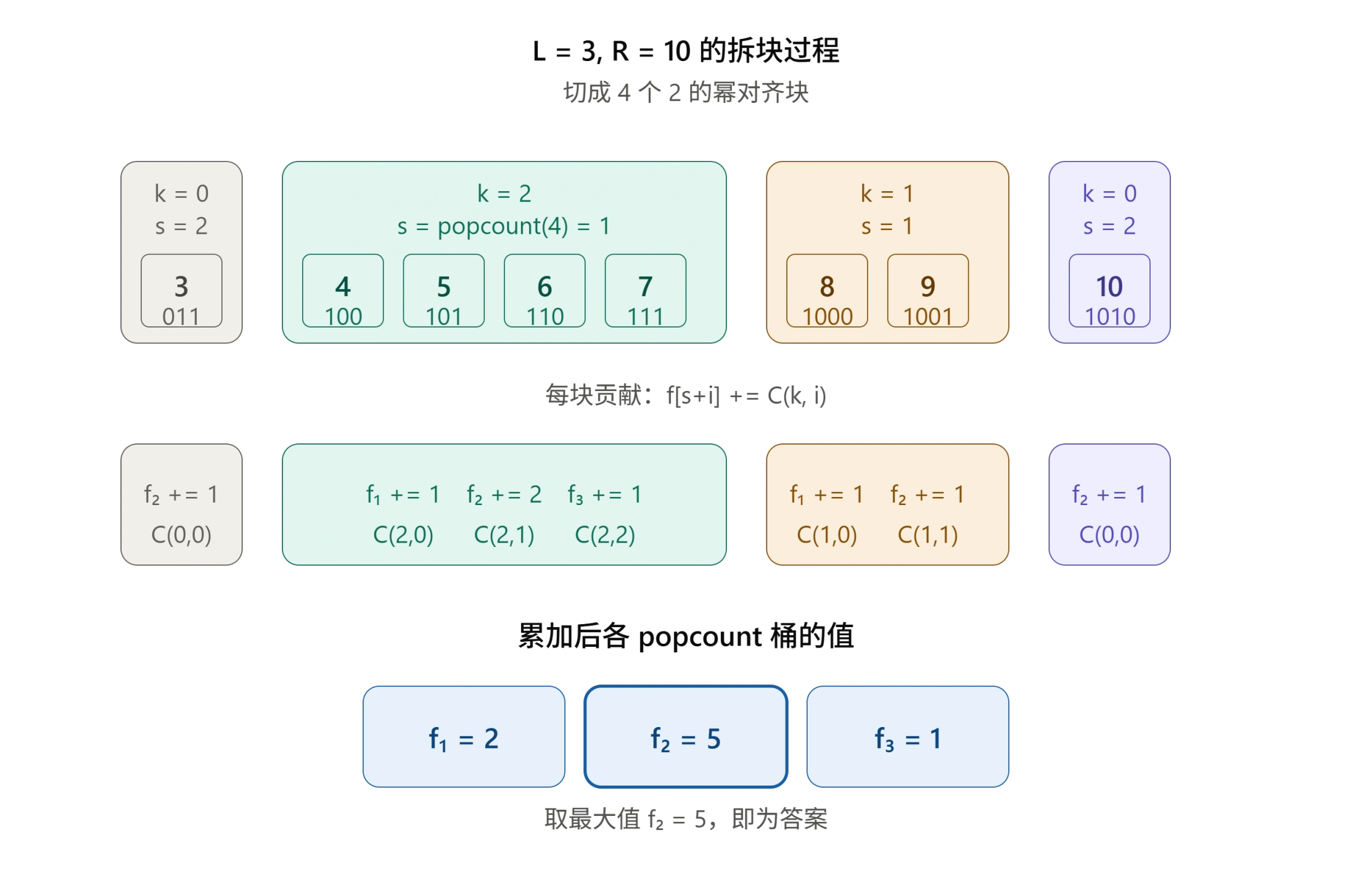
拆块次数是 级别的,每块最多贡献 个二项式系数,单组询问 。
细节
- 最后 就是答案。原代码里写成后缀 塞到 输出,效果一样。
- 多测记得清空 。
AC code
using ll = long long;
const int S = 65;
ll c[S][S], f[S];
int main() {
    ios::sync_with_stdio(false);
    cin.tie(nullptr);
    for (int i = 0; i <= 60; ++i) {
        c[i][0] = c[i][i] = 1;
        for (int j = 1; j < i; ++j)
            c[i][j] = c[i - 1][j - 1] + c[i - 1][j];
    }
    int t; cin >> t;
    while (t--) {
        ll l, r; cin >> l >> r;
        fill(f, f + S, 0);
        while (l <= r) {
            int k = __builtin_ctzll(l);
            ll len = r - l + 1;
            while ((1LL << k) > len) --k;
            int s = __builtin_popcountll(l);
            for (int i = 0; i <= k; ++i) f[s + i] += c[k][i];
            l += 1LL << k;
        }
        ll ans = 0;
        for (int i = 0; i <= 60; ++i) ans = max(ans, f[i]);
        cout << ans << '\n';
    }
    return 0;
}
advertisement
如果你也喜欢这种写法,欢迎加入团队。