
思路
首先最优方案肯定是走一条路然后原路返回。
首先考虑 ,用 表示最优的 路径,分两种情况证明:
-
若 不包含危桥。
显然原路返回最优,因为走其他路可能占用危桥的使用次数。
-
若 包含危桥,令其中一座危桥为 。
若走一条不经过 的路,必然会经过另一座危桥(否则 就不是最优路径),令其为 ,这样会使 都被经过一次,这样要么导致 走不通,要么导致 也不能原路返回,要么只能与 交叉。
因此,绕路走严格不优于原路返回。
同理。
因此可以直接将危桥作为一条边权为 的边,普通桥作为一条边权为 的边,建立源点 和汇点 ,连边 ,判断最大流是否为 。
但这样可能会流 ,不足以判断是否合法。
考虑到控制流的起点较为困难,因此需要一种玄学的方法来判断。
先放结论:
若上文建图方法跑出的最大流为 ,且将边 ,替换为 后最大流也为 ,该组数据合法。
接下来证明该结论的的充要性。
以下图为例:
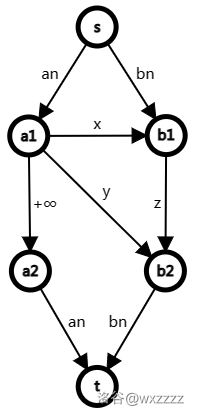
令 表示 到 的流量,假设该图最大流为 ,将边 ,替换为 后最大流也为 ,有:
因此结论成立。
代码
#include <bits/stdc++.h>
using namespace std;
int n, s, t, a1, a2, an, b1, b2, bn, idx, d[55], v[5005], h[55], e[5005], ne[5005], st[55];
char g[55][55];
queue<int> q;
void add(int x, int y, int z) {
    v[++idx] = y, e[idx] = z, ne[idx] = h[x], h[x] = idx;
    v[++idx] = x, ne[idx] = h[y], h[y] = idx;
}
bool bfs() {
    for (int i = 1; i <= t; i++)
        d[i] = 0, st[i] = h[i];

    d[s] = 1, q.push(s);

    while (!q.empty()) {
        int x = q.front();
        q.pop();

        for (int i = h[x]; ~i; i = ne[i]) {
            int y = v[i];

            if (!d[y] && e[i]) {
                d[y] = d[x] + 1;
                q.push(y);
            }
        }
    }

    return d[t];
}
int dfs(int x, int flow) {
    if (x == t || !flow)
        return flow;

    int ret = 0, tmp;

    for (int i = st[x]; ~i; i = ne[i]) {
        int y = v[i];
        st[x] = i;

        if (d[y] == d[x] + 1) {
            tmp = dfs(y, min(flow - ret, e[i]));
            ret += tmp;
            e[i] -= tmp;
            e[((i - 1) ^ 1) + 1] += tmp;
        }
    }

    return ret;
}
int dinic() {
    int ret = 0;

    while (bfs())
        ret += dfs(s, 1e9);

    return ret;
}
void clear() {
    for (int i = 1; i <= t; i++)
        h[i] = st[i] = -1, d[i] = 0;

    for (int i = 1; i <= idx; i++)
        v[i] = e[i] = ne[i] = 0;

    idx = 0;
}
void build() {
    for (int i = 1; i <= n; i++) {
        for (int j = 1; j <= n; j++) {
            if (i == j)
                continue;

            if (g[i][j] == 'N')
                add(i, j, 1e9);
            else if (g[i][j] == 'O')
                add(i, j, 1);
        }
    }
}
int main() {
    memset(h, -1, sizeof h);

    while (~scanf("%d%d%d%d%d%d%d", &n, &a1, &a2, &an, &b1, &b2, &bn)) {
        a1++, a2++, b1++, b2++;
        s = n + 1, t = n + 2;

        for (int i = 1; i <= n; i++)
            scanf("%s", g[i] + 1);

        build();
        add(s, a1, an), add(a2, t, an);
        add(s, b1, bn), add(b2, t, bn);

        if (dinic() != an + bn) {
            puts("No");
            clear();
            continue;
        }

        clear();
        build();
        add(s, a1, an), add(a2, t, an);
        add(s, b2, bn), add(b1, t, bn);

        if (dinic() != an + bn) {
            puts("No");
            clear();
            continue;
        }

        puts("Yes");
        clear();
    }

    return 0;
}