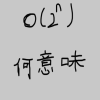
这是蒟蒻的第一篇题解 大佬勿喷
做法:时间戳+二分 复杂度
题目描述:
给定一棵有根多叉树,请求出指定两个点之间最近的公共祖先。
思路:
暴力跳已于 2021/10/4 卡掉
暴力:
简单优化一下的暴力最坏复杂度为 当然过不了
蒟蒻的暴力思路:hash+q向上寻找祖先
第一个它的祖先也是p的祖先为最近公共祖先
hash[i][j]==true 表示 i是j的最近公共祖先
代码很明显 但空间为 时间
优化空间:
的存hash数组会报错 且空间会炸
此时会想到时间戳区间或 括号序(Parenthesis Ordering) 优化空间
及dfs序+子树遍历结束值
dfs序是先序遍历序(如果不会先序遍历 或 dfs请先学习 在此蒟蒻不在过多赘述)
用两个数组 hin[N] 和 hou[N] 存储dfs序和子树遍历结束值
如何比较hin和hou来得到是否为祖先呢?
如果遍历比他晚的(及dfs序比其大的) 肯定不是他的祖先
因为先序便利为先根后子树 那么祖先肯定在其上方
如果结束比他早的话 肯定不是他的祖先
因为遍历完子树再记录子树遍历结束值,祖先结束值肯定比其晚
为什么要dfs序+子树遍历结束值? 不直接dfs序或子树遍历结束值呢
举个例子
根节点是 1 左孩子是2 右孩子是3
如果只有dfs序 发生问题:
dfs序hin[1]=1 hin[2]=2 hin[3]=3
2是3的祖先么
hin[2]<=hin[3] 是 但实际上2不是3的祖先
如果只有结束值 发生问题:
结束值hou[1]=3 hou[2]=2 hou[3]=3
3是2的祖先么
hou[3]>=hou[2] 但实际上3不是2的祖先
而如果dfs序+子树遍历结束值 祖先的子树范围便有了起点,终点 可以判断祖先了
代码如下:
int times=0;//全局变量
inline void dfs(int u,int fa){
hin[u]=times++;
for(auto v:e[u]){
if(v==fa) continue;
dfs(v,u);
}
hou[u]=times;
}
优化时间:
必炸 过不了
想办法得优化到M log^2 N级别或M log N级别甚至线性
因为深度从下往上依次递减
最近公共祖先是深度最少 很容易想到二分
二分虽简单 但应用场景很广 学好二分很重要
很明显是深度二分
但二分的是深度 但这一层有很多
所以我们要找这一层p的祖先 q的祖先也行
但一次次找这一层p的祖先很麻烦且复杂度又上来了
想到 定义up[i][p]表示p向上走i步(及深度)的下标
但预处理复杂度依旧很高
可以用二进制拆分
为什么要用二进制呢
因为二进制快(位运算 逻辑运算复杂度 都为1)
在dfs中添加
up[0][u]=fa;
for(int i=1;i<?;i++) up[i][u]=up[i-1][up[i-1][u]];
这里?为最多需 二进制位数
定义logg 你既可以直接定义为20 也可定义为
两种都行
up[i][u]=up[i-1][up[i-1][u]]; 表示 到达步需要先走到mid 再走步
但注意 需要定义 up[0][u]=fa; 因为如果直接用公式 数组越界
因为二分的是深度 所以需要用到dep
伪代码
dep[u]=dep[祖先]+1直接在dfs地方遍历加上
因为用到二进制拆分
所以定义一个函数
lift(q,i) 表示q向上走i步到达的点
代码:
inline int lift(int q,int st){
for(int i=0;i<logg;i++)
if((st&(1<<i))!=0) q=up[i][q];
return q;
}这是从到
1<<i 表示 (如果没学好位运算请学习)
如果(st&(1<<i))==0 表示st二进制中第i位为0
二分部分
inline int lca(int p,int q){
if(dep[p]<dep[q]) swap(p,q);
int low=0,he=dep[p];
int ans=0;
while(low<=he){
int mid=(low+he)/2;
int step=dep[p]-mid;
int u=lift(p,step);
if(hin[u]<=hin[q] && hou[u]>=hou[q]){
ans=u;
low=mid+1;
}
else he=mid-1;
}
return ans;
}
未优化常数的代码:
#include<bits/stdc++.h>
using namespace std;
const int N=5e5+66;
int n,m,s;
vector<int>e[N];
int logg=0;
inline int read(){
int ch=0;
int ans=0;
ch=getchar();
while(ch<'0' || ch>'9'){
ch=getchar();
}
while(ch>='0' && ch<='9'){
ans*=10;
ans+=ch-'0';
ch=getchar();
}
return ans;
}
int dep[N],hin[N],hou[N],times,up[30][N];
inline void dfs(int u,int fa){
hin[u]=times++;
up[0][u]=fa;
for(int i=1;i<logg;i++) up[i][u]=up[i-1][up[i-1][u]];;
for(auto v:e[u]){
if(v==fa) continue;
dep[v]=dep[u]+1;
dfs(v,u);
}
hou[u]=times;
}
inline int lift(int q,int st){
for(int i=0;i<logg;i++)
if((st&(1<<i))!=0) q=up[i][q];
return q;
}
inline int lca(int p,int q){
if(dep[p]<dep[q]) swap(p,q);
int low=0,he=dep[p];
int ans=0;
while(low<=he){
int mid=(low+he)/2;
int step=dep[p]-mid;
int u=lift(p,step);
if(hin[u]<=hin[q] && hou[u]>=hou[q]){
ans=u;
low=mid+1;
}
else he=mid-1;
}
return ans;
}
int main(){
     n=read();
    m=read();
    s=read();
    for(int i=1;i<n;i++){
    int x,y;
    x=read();
    y=read();
    e[x].push_back(y);
    e[y].push_back(x);
    }
    while((1<<logg)<=n) logg++;
    dfs(s,0);
    for(int i=1;i<=m;i++){
     int a,b;
    a=read();
    b=read();
    printf("%d\n",lca(a,b));
    }
    return 0;
}但是会别第二组数据给卡掉
记录
优化常数
- printf 可以改为快写(用kwrite)
- 二分部分通过画图发现可以用上一个mid和u来优化常数
- 二分部分可以将p,q调到同一层(将下面的跳到上面来)如果p==q则直接return p;
q也行 - 改进lift 计算 将其直接改为循环 st的位数
代码:
#include<bits/stdc++.h>
using namespace std;
const int N=5e5+66;
int n,m,s;
vector<int>e[N];
int logg=0;
const int OUT= 1<<20;
char outb[OUT];
int outt=0;
inline void flush() {
    if (outt){
    fwrite(outb,1,outt, stdout);
    outt=0;
    }
}
inline void write(int x) {
    if (x>=10) write(x/10);
    outb[outt++] = '0'+x%10;
    if (outt>= OUT-10) flush();
}
inline int read(){
int ch=0;
int ans=0;
ch=getchar();
while(ch<'0' || ch>'9'){
ch=getchar();
if(ch==EOF) return 0;
}
while(ch>='0' && ch<='9'){
ans*=10;
ans+=ch-'0';
ch=getchar();
}
return ans;
}
int dep[N],hin[N],hou[N],times,up[30][N];
inline void dfs(int u,int fa){
hin[u]=times++;
up[0][u]=fa;
for(int i=1;i<logg;i++) up[i][u]=up[i-1][up[i-1][u]];;
for(auto v:e[u]){
if(v==fa) continue;
dep[v]=dep[u]+1;
dfs(v,u);
}
hou[u]=times;
}
inline int lift(int q,int st){
for (int i=0;st;++i,st>>=1) {
if (st&1) q = up[i][q];
}
return q;
}
inline int lca(int p,int q){
if(dep[p]<dep[q]) swap(p,q);
p = lift(p,dep[p]-dep[q]);
if (p==q) return p;
int low=0,he=dep[q]-1;
int ans=0,m=dep[p],sh=p;
while(low<=he){
int mid=(low+he)/2;
int step,u;
    if(mid<m){
    step=m-mid;
    u=lift(sh,step);
    }
else{
step=dep[p]-mid;
u=lift(p,step);
}
if(hin[u]<=hin[q] && hou[u]>=hou[q]){
ans=u;
low=mid+1;
}
else he=mid-1;
m=mid;
sh=u;
}
return ans;
}
int main(){
     n=read();
    m=read();
    s=read();
    for(int i=1;i<n;i++){
    int x,y;
    x=read();
    y=read();
    e[x].push_back(y);
    e[y].push_back(x);
    }
    while((1<<logg)<=n) logg++;
    dfs(s,0);
    for(int i=1;i<=m;i++){
     int a,b;
    a=read();
    b=read();
    write(lca(a,b));
    outb[outt++] = '\n';
    if (outt>= OUT-10) flush();
    }
    flush();
    return 0;
}
成功AC
但如果你还能优化的话会发现有时候时间限制1s也没事 代码
#include <bits/stdc++.h>
using namespace std;
const int N=5e5+66;
int n,m,s;
vector<int>e[N];
int logg=0;
const int OUT= 1<<20;
char outb[OUT];
int outt=0;
inline void flush() {
    if (outt){
    fwrite(outb,1,outt, stdout);
    outt=0;
    }
}
inline void write(int x) {
    if (x>=10) write(x/10);
    outb[outt++] = '0'+x%10;
    if (outt>= OUT-10) flush();
 }
 inline int read(){
 int ch=0;
 int ans=0;
 ch=getchar();
 while(ch<'0' || ch>'9'){
 ch=getchar_unlocked();
 if(ch==EOF) return 0;
 }
 while(ch>='0' && ch<='9'){
 ans*=10;
 ans+=ch-'0';
 ch=getchar_unlocked();
 }
return ans;
}
int dep[N],hin[N],hou[N],times,up[30][N];
//struct node{int da,fu;};
//bool operator <(const node &a,const node &b){return a.da<b.da;}
inline void dfs(int u,int fa){
/*int farth[N];
vector<int>leaf;
priority_queue<node>q;
stack<node>st;
st.push(node{u,fa});
while(!st.empty()){
int u=st.top().da,fa=st.top().fu;
farth[u]=fa;
st.pop();
hin[u]=times++;
up[0][u]=fa;
for(int i=1;i<logg;i++) up[i][u]=up[i-1][up[i-1][u]];;
for(auto v:e[u]){
if(v==fa) continue;
dep[v]=dep[u]+1;
st.push(node{v,u});
}
if(e[u].size()==1 && u!=s) leaf.push_back(u); // 只有一个与父亲节点相连
}
for(auto v:leaf){hou[v]=hin[v]; q.push(node{hou[v],v});}
while(!q.empty()){
int f=q.top().fu;
q.pop();
int fa=farth[f];
if(hou[f]>hou[fa]){
q.push(node{hou[fa],fa});
hou[fa]=hou[f];
}
}*/
static int st[N], it[N];
    int top=0;
    st[++top]=s;
    hin[s]=++times;
    dep[s]=0;
    up[0][s]=0;
    it[s]=0;

    while (top) {
        int u=st[top];
        if (it[u]<(int)e[u].size()) {
            int v=e[u][it[u]++];
            if (v==up[0][u]) continue;
            up[0][v]=u;
            dep[v]=dep[u] + 1;
            hin[v]=++times;
            st[++top]=v;
            it[v]=0;
        } else {
            hou[u]=times;
            top--;
        }
    }
}
inline int lift(int q,int st){
for (int i=0;st;++i,st>>=1) {
if(st&1) q = up[i][q];
}
return q;
}
inline int lca(int p,int q){
if(hin[p]<=hin[q] && hou[p]>=hou[q]){
return p;
}
if(hin[p]>=hin[q] && hou[p]<=hou[q]){
return q;
}
if(dep[p]<dep[q]) swap(p,q);
p = lift(p,dep[p]-dep[q]);
if (p==q) return p;
int low=0,he=dep[q]-1;
int ans=0;
while(low<=he){
int mid=(low+he)/2;
int step,u;
step=dep[p]-mid;
u=lift(p,step);
if(hin[u]<=hin[q] && hou[u]>=hou[q]){
ans=u;
low=mid+1;
}
else{he=mid-1; p=u;}
}
return ans;
}
int main(){
     n=read();
    m=read();
    s=read();
    for(int i=1;i<n;i++){
    int x,y;
    x=read();
    y=read();
    e[x].push_back(y);
    e[y].push_back(x);
    }
    while((1<<logg)<=n) logg++;
    dfs(s,0);
    for (int i=1;i<logg;i++)
    for (int j=1; j<=n;j++)
        up[i][j] = up[i-1][up[i-1][j]];
    for(int i=1;i<=m;i++){
     int a,b;
    a=read();
    b=read();
    write(lca(a,b));
    outb[outt++] = '\n';
    if (outt>= OUT-10) flush();
    }
    flush();
    return 0;
}
这个代码优化了输入 并将dfs改为非递归
成功切了这道模板题
注意:此为非正解的做法,正式竞赛尽量用正解
总之 要相信常数的威力
WAW 撒花