
题意:
给定长度为 的序列 。
一共 次询问,每次询问给定 ,你需要输出有多少 满足 。
题解:
对于异或问题,考虑字典树。
我们把关于 和 的 放到字典树上,考虑 在什么情况下会使得满足条件。
从高到低枚举位,
- 前 位都一样,并且第 位的 是
我们发现只要 与 异或值为 便一定满足条件,那么可以对这个节点打一个 的标记,只要询问的 经过这里,那么就一定会产生这个贡献,并且已经不用再往下深入了,因为只要到了这个点就有贡献,与子树无关。
但是还要考虑如果这位的 与 异或也为 的话那么就还需要继续考虑后面的位数,继续去看其他的节点是否可行。
- 前 位都一样,并且第 位的 位是
那么此时只有当异或值位 时才有可能能产生贡献,而异或值为 时则一定不行,所以只需要考虑 的情况即可。
并且我们需要对最后移位特判,因为等于这种情况也是可行的。
对于查询只需要按照 的二进制从上往下走一遍将打的标记加起来就行了。
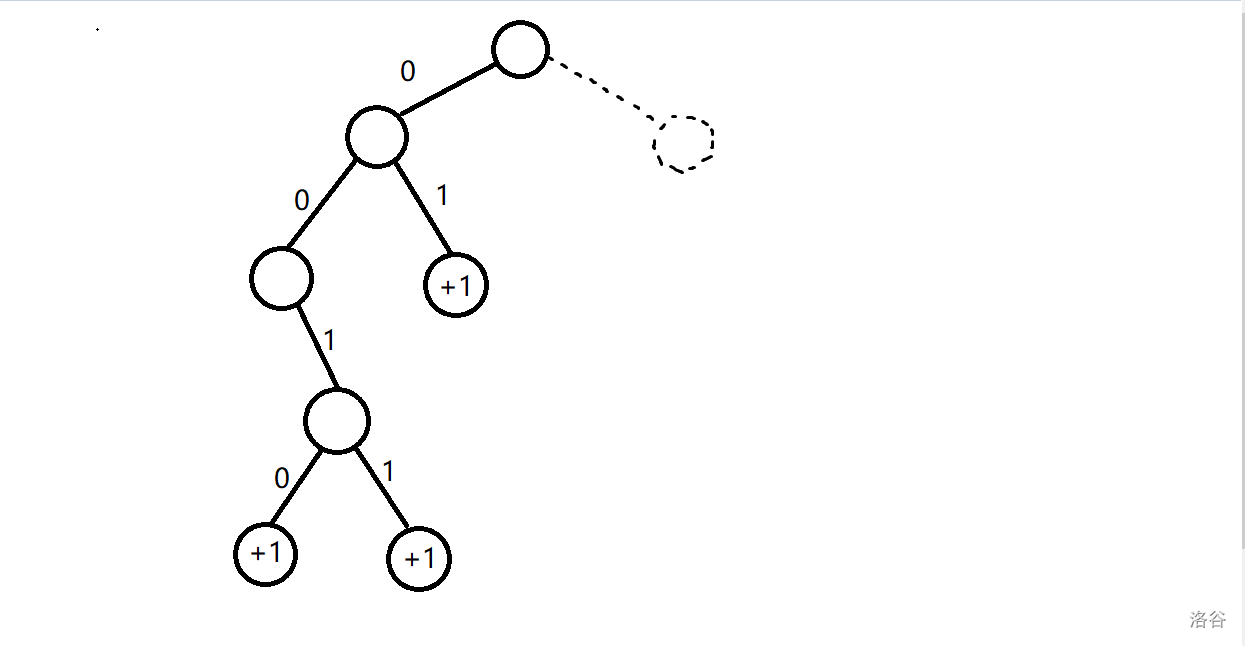
当 和 时举个例子。
-
对于最高位,只有 这位等于 才可能产生贡献,所以只建立一个 的节点。
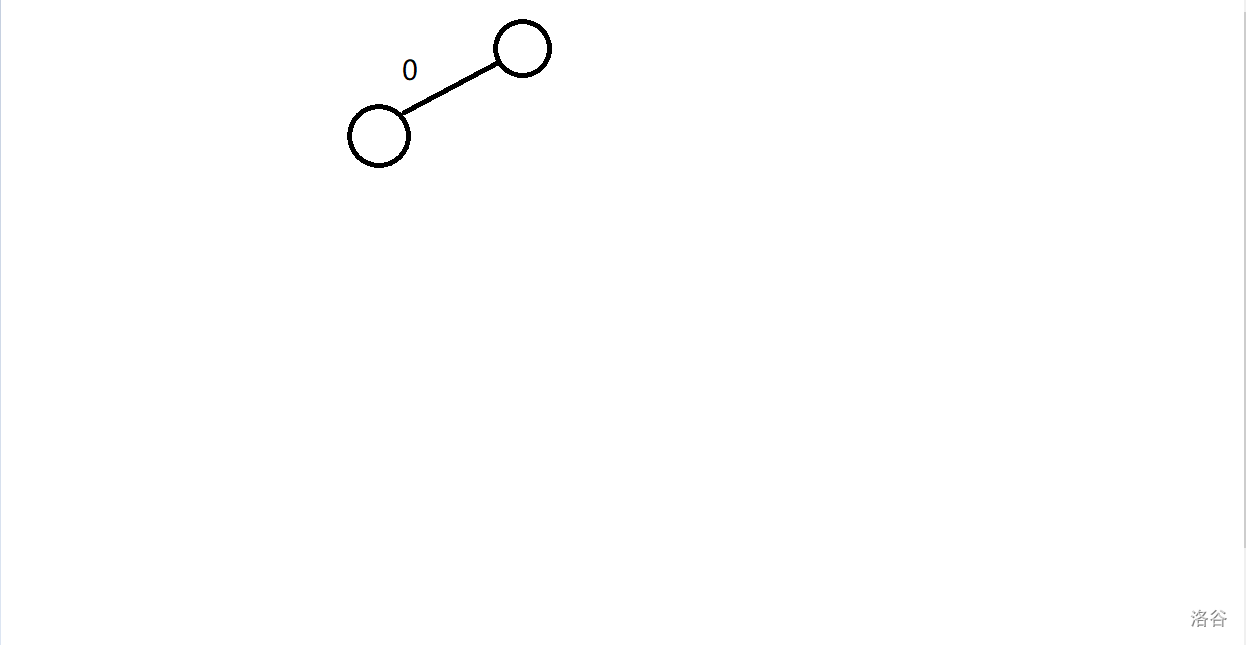
-
对于第二位,当 这位等于 时一定可行,所以在 那里 。当 这位等于 时也可能可行,所以也要建立一个节点。
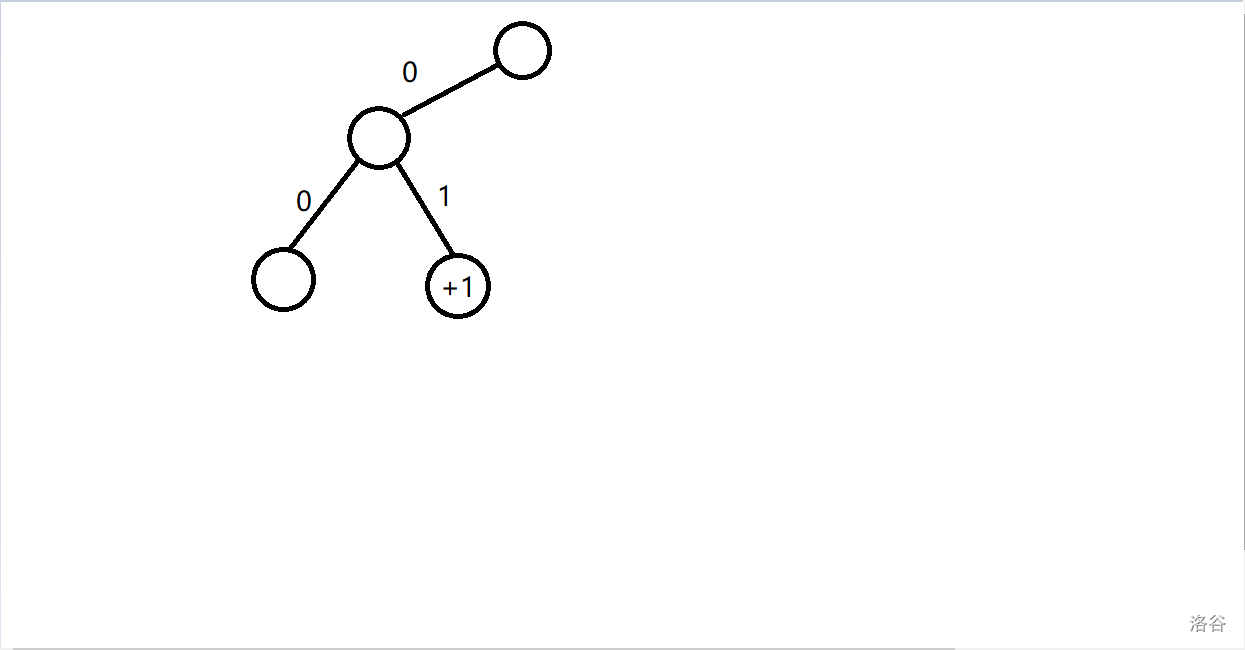
-
对于第三位,只有 这位等于 时可能可行,所以往 建立节点。
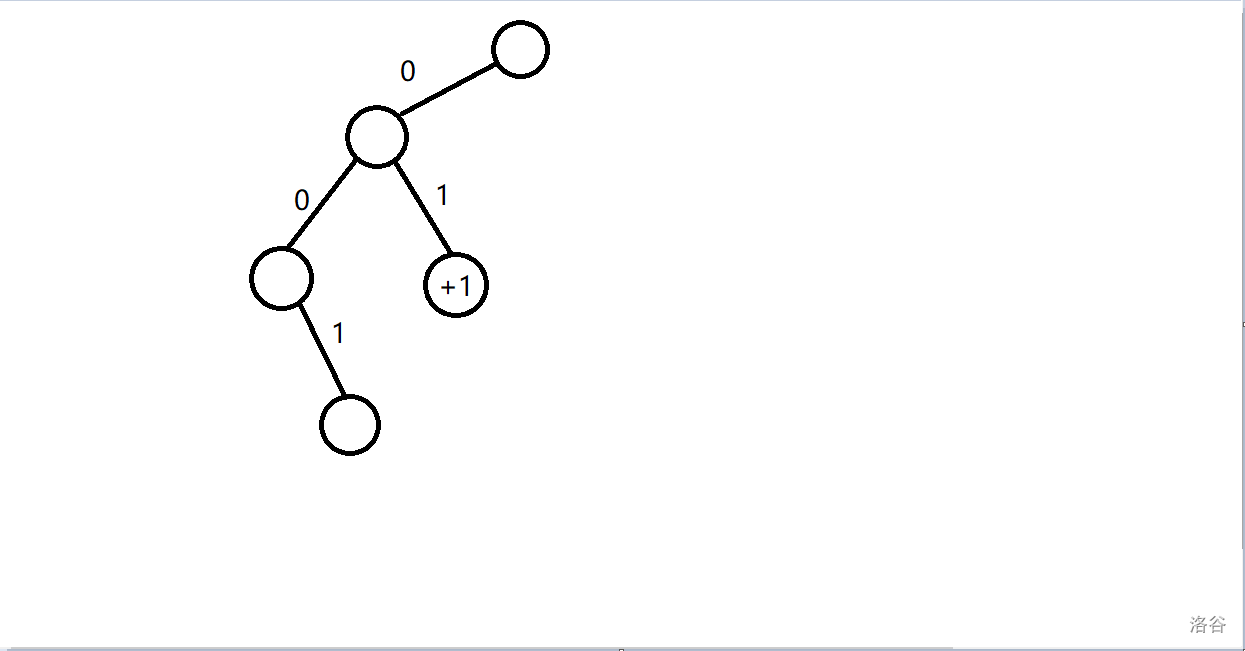
-
对于最后一位,我们发现 这位等于 或 都能产生贡献,所以都打一个 的标记。
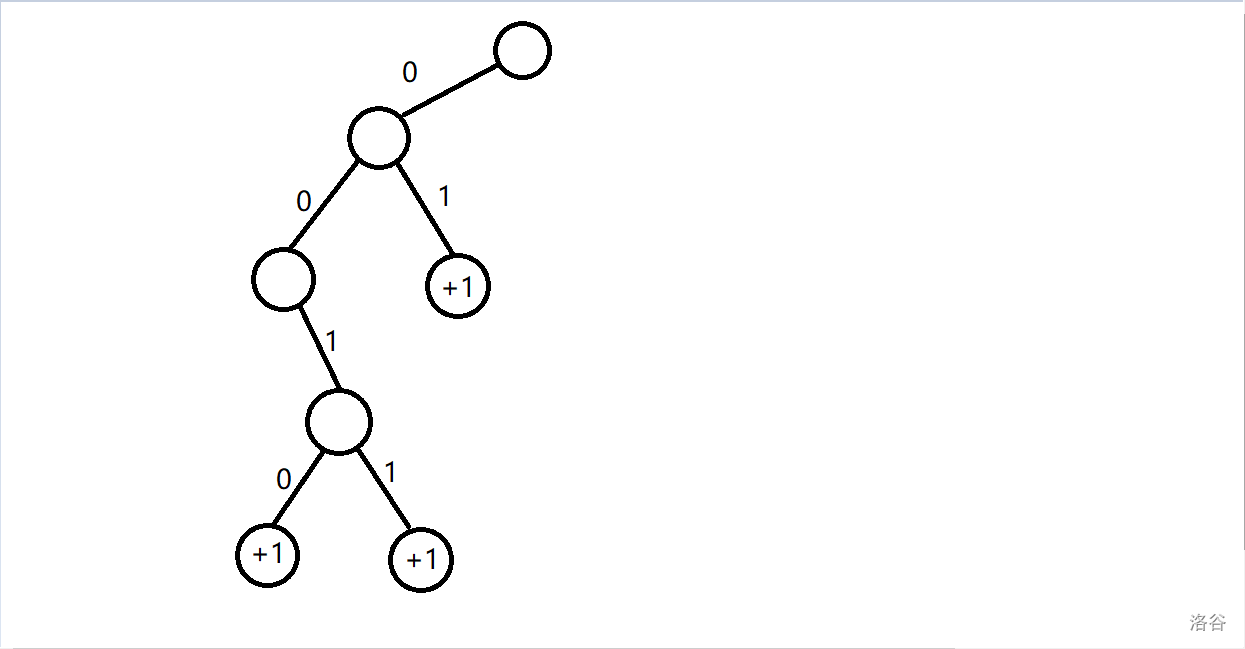
当 时,。
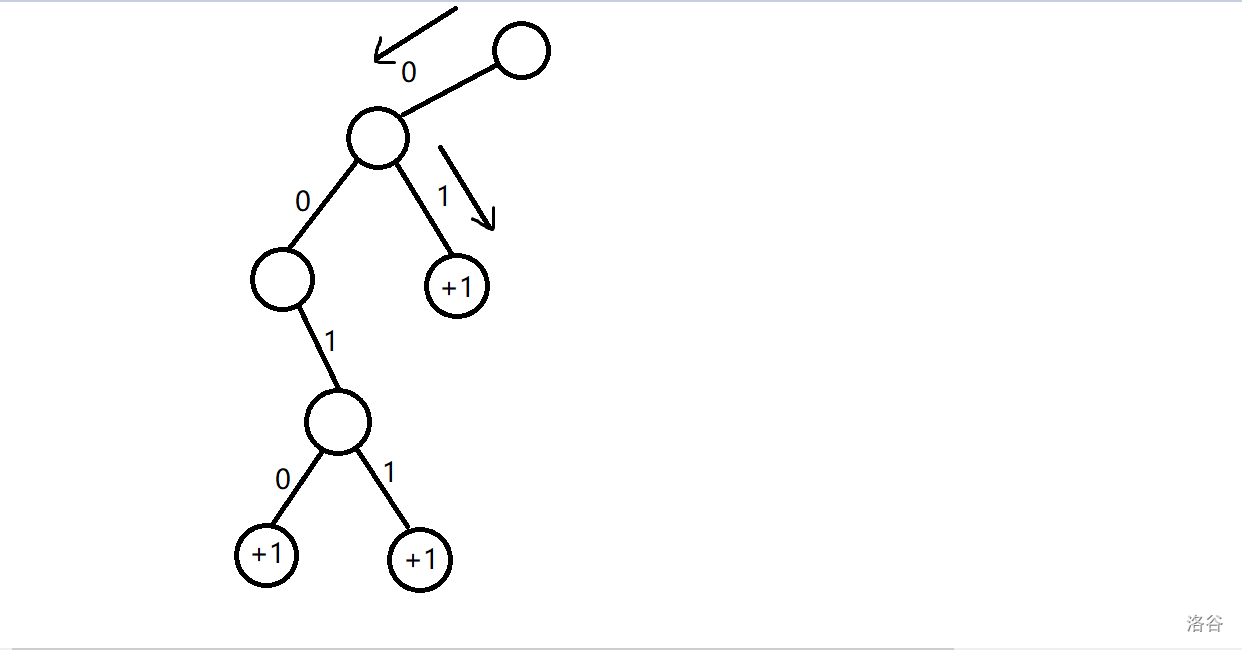
当 时,。
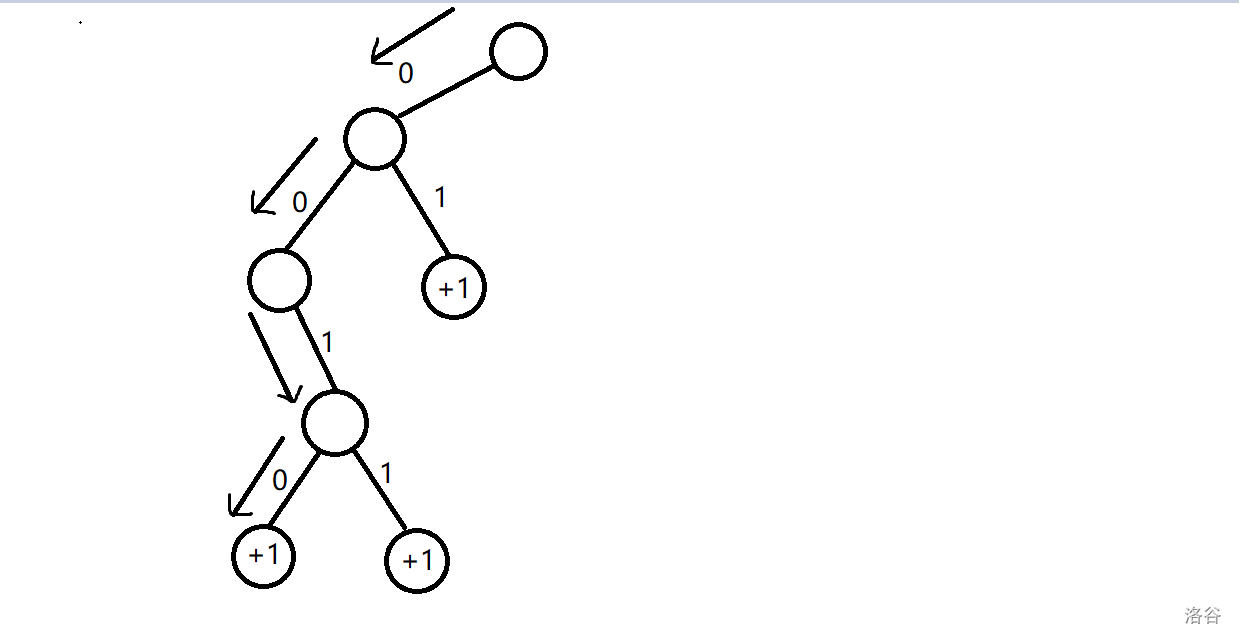
当 时,。
复杂度:
建立节点时我们最多只会往一边去建立节点,所以是 的,而查询时也是只会走 层的,所以时间复杂度 。
code:
#include<bits/stdc++.h>
using namespace std;

int tot;
int a[500010],b[500010];
struct Tree{
	int ch[2],val;
	Tree(){
		memset(ch,0,sizeof(ch));
	}
}tr[16000010];
int f=0;
void insert(int x,int y){
	int p=0;
	for(int i=31;i>=0;i--){
		int k1=(x>>i)&1,k2=(y>>i)&1,q;
		if(i==0){
			if(k2==0){
				q=k1;
				if(tr[p].ch[q]==0)
					tr[p].ch[q]=++tot;
				tr[tr[p].ch[q]].val++;
			}else{
				q=k1;
				if(tr[p].ch[q]==0)
					tr[p].ch[q]=++tot;
				tr[tr[p].ch[q]].val++;
				q=k1^1;
				if(tr[p].ch[q]==0)
					tr[p].ch[q]=++tot;
				tr[tr[p].ch[q]].val++;
			}

			continue;
		}
		if(k2==1){
			q=k1;
			if(tr[p].ch[q]==0)
				tr[p].ch[q]=++tot;
			tr[tr[p].ch[q]].val++;
			q=k1^1;
			if(tr[p].ch[q]==0)
				tr[p].ch[q]=++tot;
			p=tr[p].ch[q];
		}else{
			q=k1;
			if(tr[p].ch[q]==0)
				tr[p].ch[q]=++tot;
			p=tr[p].ch[q];
		}
	}
}
int query(int x){
	int p=0,ans=0;
	for(int i=31;i>=0;i--){
		int q=(x>>i)&1;
		if(tr[p].ch[q])ans+=tr[tr[p].ch[q]].val,p=tr[p].ch[q];
		else break;
	}
	return ans;
}
signed main(){
	ios::sync_with_stdio(false);
	cin.tie(0);cout.tie(0);
	int T,n,q;
	cin>>T>>n>>q;
	for(int i=1;i<=n;i++)cin>>a[i];
	for(int i=1;i<=n;i++)cin>>b[i],insert(a[i],b[i]);
	int lst=0;
	while(q--){
		int k;
		cin>>k;
		k=k^(lst*T);
		lst=query(k);
		cout<<lst<<'\n';
	}
	return 0;
}