P1195 题解
1.什么是生成树?
生成树定义:生成树就是在联通图内图里的一棵树
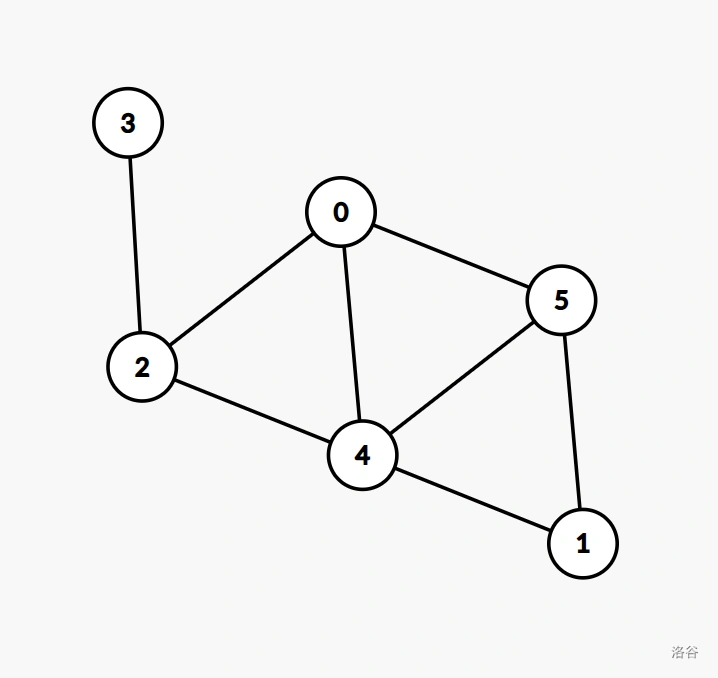
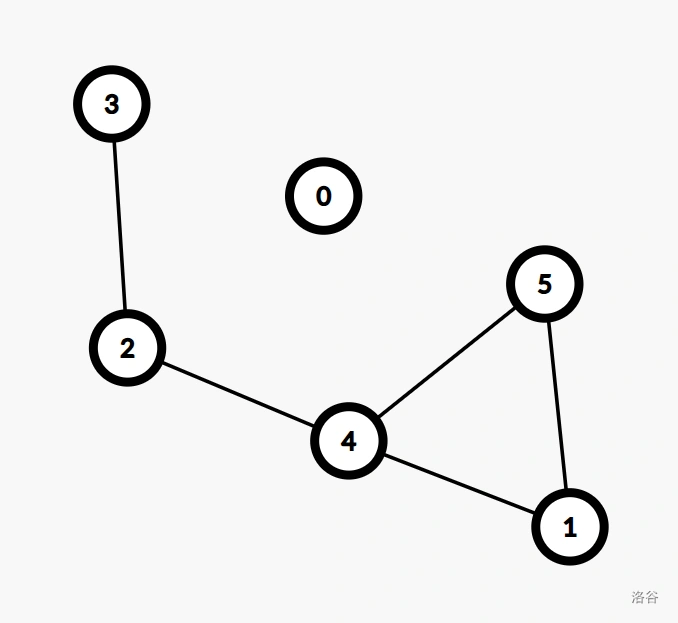
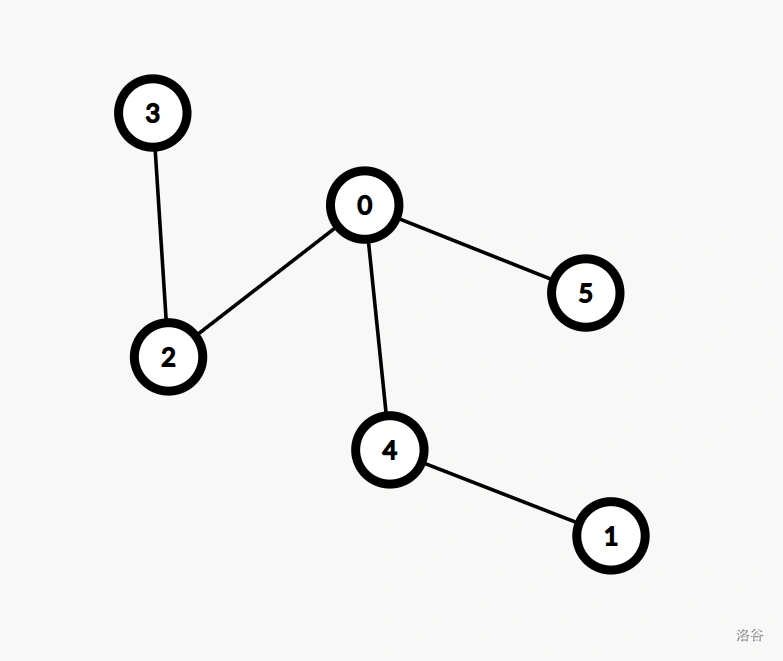
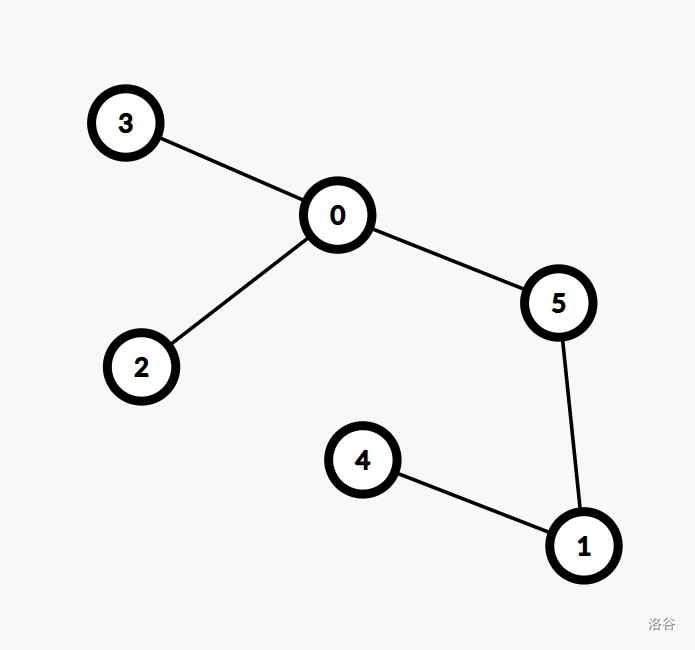
生成树性质:如果原图有 n 个节点,则任意一棵生成树内,一定只有 n 各节点,n−1 条边。
示例:
下图中的生成树可以是(单选)?
A.
B.
C.
D.
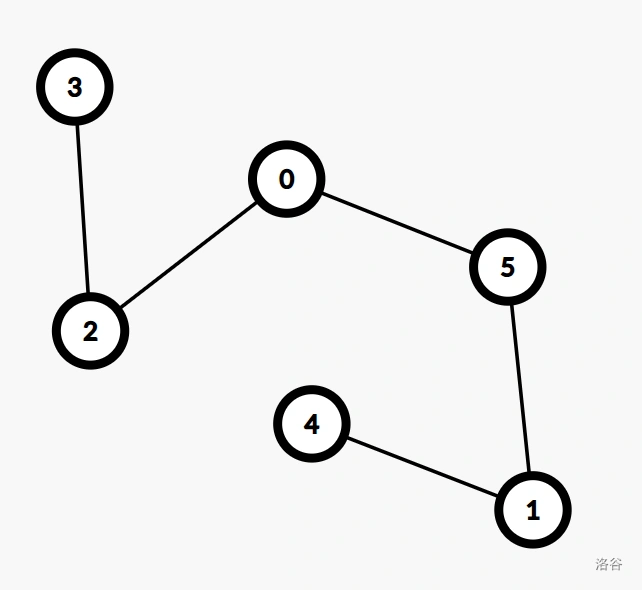
答案
2.什么是最小生成树?
最小生成树定义:就是在一个有权无向联通图内,所有最小生成树中,书上的总边权和最小的生成树(可能有多个)。
示例
下图中的生成树可以是(单选)?
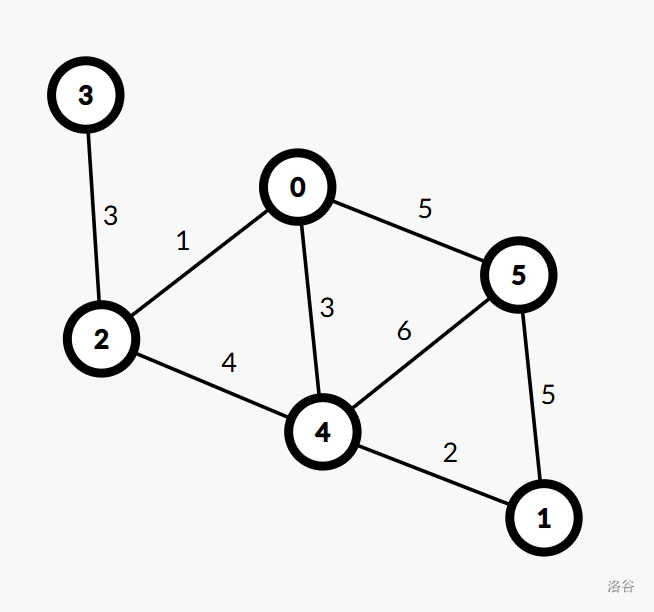
A.
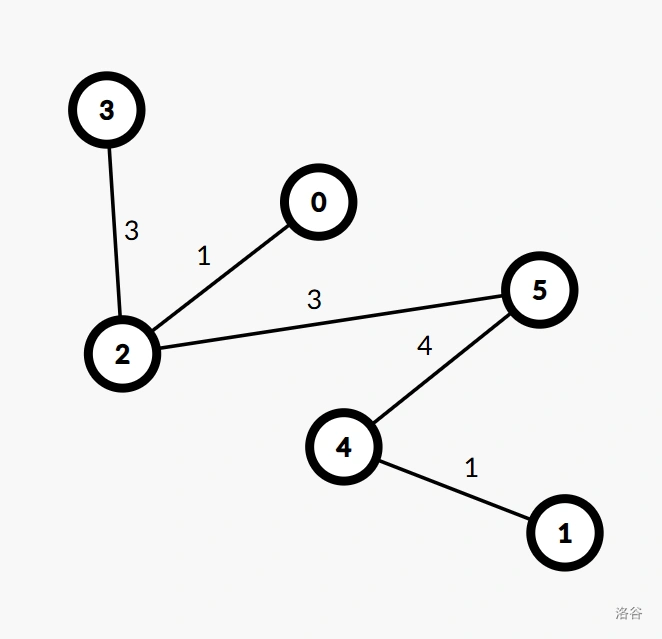
B.
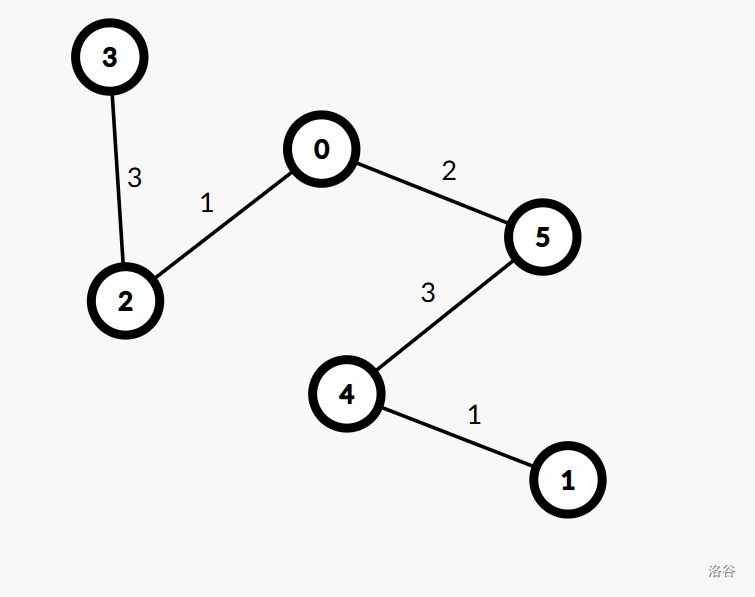
C.
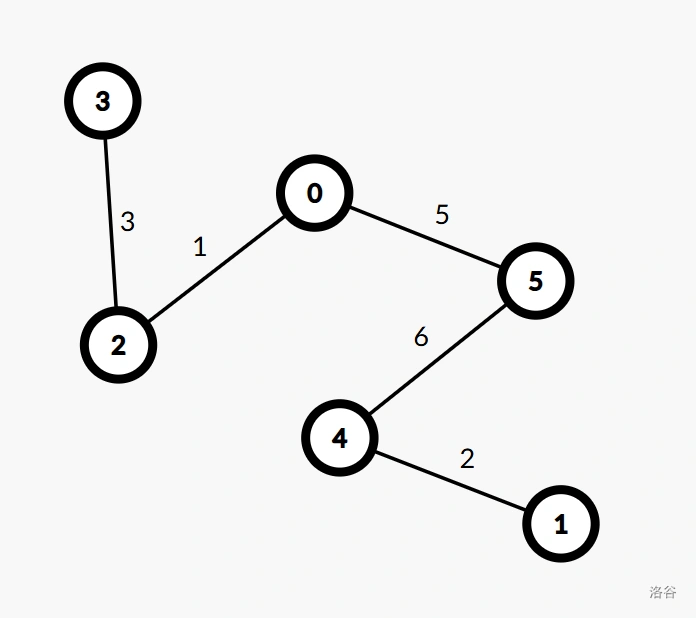
D.
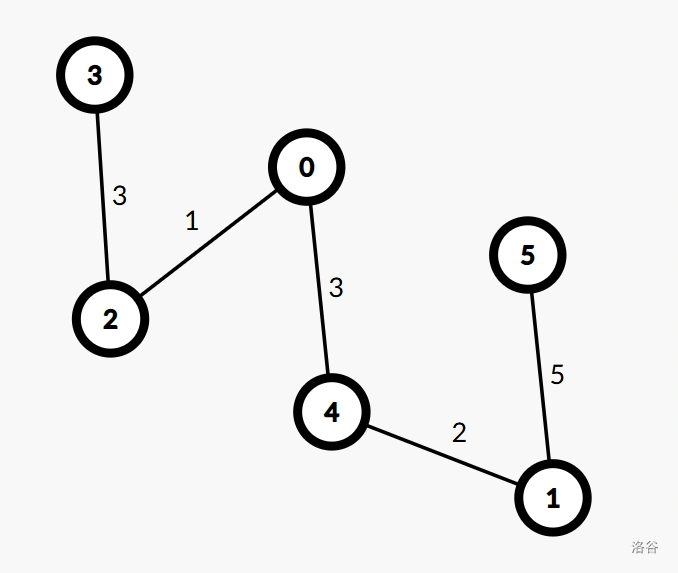
答案
如何实现最小生成树?
思路:
1.先对边数组按权值从小到大进行排序
C++struct edge{
int u,v,w;
}
vector<edge> G;
bool cmp(edge x,edge y){
return x.w<y.w;
}
int main(){
//假设已经输入
sort(G.begin(),G.end(),cmp);
return 0;
}
2.接着遍历图上的每一条边
C++int main(){
//已排序
for(auto e:G){
int u=e.u,v=e.v,w=e.w;
}
return 0;
}
3.判断 u 和 v 是否连通(并查集实现)
如果连通,加入这条边后,会形成一个环,这样就不是最小生成树了,所以不能加入这条边
如果不连通,则可以把该边加入最小生成树,sum 累加该边的边权
C++ for(auto e:G){
int u=e.u,v=e.v,w=e.w;
if(findRt(u)!=findRt(v)) sum+=w,cnt++; //如果不连通,即可以加入最小生成树,sum累加w,边数+1
//否则就不用管
}
完整代码实现(P3366)
C++#include<bits/stdc++.h>
using namespace std;
const int N=1e5+5;
int n,m;
int fa[N];
int findRt(int x){
if(fa[x]==x) return x;
return fa[x]=findRt(fa[x]);
}
void merge(int x,int y){
int fx=findRt(x);
int fy=findRt(y);
fa[fx]=fy;
}
struct node{
int u,v,w;
};
bool cmp(node x,node y){
return x.w<y.w;
}
vector<node> e;
int main(){
cin>>n>>m;
for(int i=1;i<=n;++i) fa[i]=i;
for(int i=1;i<=m;++i){
int u,v,w;
cin>>u>>v>>w;
e.push_back({u,v,w});
}
int ans=0,cnt=0;
sort(e.begin(),e.end(),cmp);
for(auto x:e){
int u=x.u,v=x.v,w=x.w;
if(findRt(u)!=findRt(v)){
merge(u,v);
ans+=w;
cnt++;
if(cnt==n-1){
cout<<ans;
return 0;
}
}
}
cout<<"orz";
return 0;
}
2.本题实现
代码基本一样,只需将 cnt==n-1 换成 cnt==n-k 即可
完整代码:
C++#include<bits/stdc++.h>
using namespace std;
using i64=long long;
const int N=2e4+5;
int n,m,k,u,v,w;
int fa[N];
struct node{
int u,v,w;
};
bool cmp(node x,node y){
return x.w<y.w;
}
int findRt(int x){
if(fa[x]==x) return x;
return fa[x]=findRt(fa[x]);
}
void merge(int x,int y){
fa[findRt(x)]=findRt(y);
}
vector<node> e;
int main(){
cin>>n>>m>>k;
if(n==k){
cout<<"0";
return 0;
}
for(int i=1;i<=n;++i) fa[i]=i;
for(int i=1;i<=m;++i){
cin>>u>>v>>w;
e.push_back({u,v,w});
}
int ans=0,cnt=0;
sort(e.begin(),e.end(),cmp);
for(auto x:e){
int u=x.u,v=x.v,w=x.w;
if(findRt(u)!=findRt(v)){
merge(u,v);
cnt++;
ans+=w;
if(cnt==n-k){
cout<<ans;
return 0;
}
}
}
cout<<"No Answer\n";
return 0;
}
3.时间复杂度:
Elog2E+(E+V)φ(V)
Tips:其中E是边数,V是节点个数。
written by
___6
这是本薄弱第一次写题解,如有任何问题请私信。