
P9016 [USACO23JAN] Find and Replace G
原题很清晰,直接进入分析。
题目分析
看到一个东西向另一个东西对应,很容易想到建图。
我们从字符串 里面的每一个字符向字符 连边。这里我们建一个虚点,向每一个当前没有入度的字符为 的点连边(可以使用一个 vector 记录此类点的编号,使用一个数组记录每个点对应的字符用于输出答案),然后再把所有字符串中的字符 s[i] 向这个点连边。
建完图后,我们在这个图上跑拓扑排序,同时使用一个数组记录每个字符最后转化成几个字符。
最后我们进行类似线段树区间查询的一个操作,详见代码。
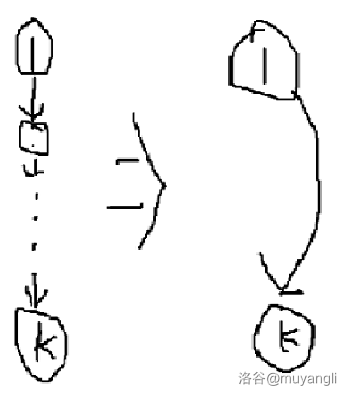
但这样是过不了的,于是我们进行优化。注意到图中有很多链式结构,我们考虑将其使用类似并查集的操作,缩成一条边。详见下图:
Code
#include <iostream>
#include <algorithm>
#include <queue>
#include <map>
#include <set>
#include <string>
#include <cstring>
#include <cstdio>
#define int long long
#define rd() read128()
#define pr(a) print128(a)
#define pc(b) putchar(b)
#define pel(c) pr(c), pc('\n')
#define psp(d) pr(d), pc(' ')
using namespace std;
int read128()
{
	int ttpttp = 0, flgflg = 1;
	char chrchr = getchar();
	if(chrchr == '-') flgflg = -1;
	while((chrchr < '0' || chrchr > '9') && chrchr != '-') chrchr = getchar();
	if(chrchr == '-') flgflg = -1, chrchr = getchar();
	while(chrchr >= '0' && chrchr <= '9') ttpttp = ttpttp * 10 + chrchr - '0', chrchr = getchar();
	return ttpttp * flgflg;
}
void print128(int ttpttp)
{
	char char_inserted_list[38];
	if(ttpttp < 0) putchar('-'), ttpttp *= -1;
	int iiiiii = 0;
	while(ttpttp > 0)
	{
		char_inserted_list[++iiiiii] = (char)(ttpttp % 10 + '0');
		ttpttp /= 10;
	}
    if(iiiiii == 0) putchar('0');
    else
    {
    	for(int i = iiiiii; i >= 1; i--) putchar(char_inserted_list[i]);
	}
}// 快读
vector<int> cnt[26];
vector<int> a[1000010];
vector<int> bb[1000010];
char mp[1000010];// 字符表
int cur, l, r, n;
int dp[1000010];// 记录转化
int lst[1000010];
int ind[1000010];
void dfs(int p, __int128 sm)
{
	//psp(p), psp(sm), pel(dp[p]);
	if(dp[p] == 1)// 找到 dp[i] = 1 即返回
	{
		pc(mp[p]);
		return;
	}
	__int128 ssm = sm;
	for(int i = 0; i < bb[p].size(); i++)
	{
		if(dp[bb[p][i]] == 2e18 && ssm < r) //此时这部分一定包含答案且后面没有包含答案的部分,自证不难
		{
			dfs(bb[p][i], ssm);
			break;
		}
		if((ssm < l && ssm + dp[bb[p][i]] >= l) || (ssm >= l && ssm < r))
			dfs(bb[p][i], ssm);
		ssm += dp[bb[p][i]];
	}
}
signed main()
{
	ios::sync_with_stdio(0);
	cin.tie(0); cout.tie(0);
	cin >> l >> r >> n;
	cnt[0].push_back(1);
	mp[1] = 'a';
	cur = 1;
	for(int i = 1; i <= n; i++)
	{
		char b;
		cin >> b;
		string s;
		cin >> s;
		if(cnt[b - 'a'].empty()) continue;
		int p;
		if(cnt[b - 'a'].size() > 1)// 建图
		{
			cur++;
			mp[cur] = b;
			for(int j = 0; j < cnt[b - 'a'].size(); j++)
				a[cur].push_back(cnt[b - 'a'][j]), ind[cnt[b - 'a'][j]]++;
			p = cur;
		}
		else p = cnt[b - 'a'][0];
		cnt[b - 'a'].clear();
		for(int j = 0; j < s.size(); j++)
		{
			a[++cur].push_back(p);
			mp[cur] = (char)s[j];
			ind[p]++;
			cnt[s[j] - 'a'].push_back(cur);
		}
	}
	queue<int> q;
	for(int i = 1; i <= cur; i++) if(ind[i] == 0) q.push(i), dp[i] = 1, lst[i] = i;
	while(!q.empty())// 拓扑
	{
		int t = q.front();
		q.pop();
		if(dp[t] == 1) mp[t] = mp[lst[t]];// 上传字符
        // lst 记录它下面一个点的编号
		for(int i = 0; i < a[t].size(); i++)
		{
			ind[a[t][i]]--;
			dp[a[t][i]] += dp[t];
			lst[a[t][i]] = t;
			if(dp[a[t][i]] > 1e18) dp[a[t][i]] = 2e18;
            // 这里使用这个操作避免出现__int128减少常数
			if(ind[a[t][i]] == 0) q.push(a[t][i]);
		}
	};
	for(int i = 1; i <= cur; i++)
		for(int j = 0; j < a[i].size(); j++)
			bb[a[i][j]].push_back(i);
	dfs(1, 0);
	return 0;
}
后记
感谢wangzhilin_lg大佬提供的指点。
有人说这个算法复杂度是假的,如果已经有 hack,请 hack 掉我并且在此题讨论版中 at 我。
另:我的做法没有完全优化,过一段时间会写一版完全优化的版本,请在那之后 hack 或者 hack 使用我的想法的人。