
Part 0. 目录
- 概念
- 普通莫队
- 树上莫队
- 带修莫队
Part 1. 概念
莫队是由莫涛提出的算法。莫队算法可以解决一类离线区间询问问题,适用性极为广泛。
Part 2. 普通莫队
普通莫队主要针对于多次区间询问的问题,基于分块的思想。
过程如下:
先将当前区间 设为 ,再每次移动一个端点,即变为 。也就是说每次移动长度会加 或减 ,从而会多一个元素或减一个元素,进而我们就产生了两个用于在移动时记录答案的函数 和 。
调用的代码如下:
inline void add(int x) {
  //...
}
inline void del(int x) {
  //...
}
sort(q + 1, q + m + 1);
int l = 1, r = 0;
for(int i = 1; i <= m; i++) {
  while(l > q[i].l) { add(a[--l]); }
  while(r < q[i].r) { add(a[++r]); }
  while(l < q[i].l) { del(a[l++]); }
  while(r > q[i].r) { del(a[r--]); }
  ans[q[i].id] = sum;
}
而排序怎么排以及块长 取多少就决定了代码的时间复杂度。
一般的排序方式是先按左端点所在块为第一关键字,再按右端点为第二关键字排序,代码如下:
return b[l] != b[x.l] ? l < x.l : r < x.r;但对于这种:
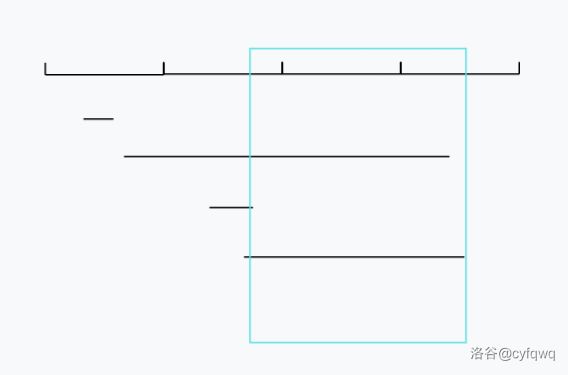
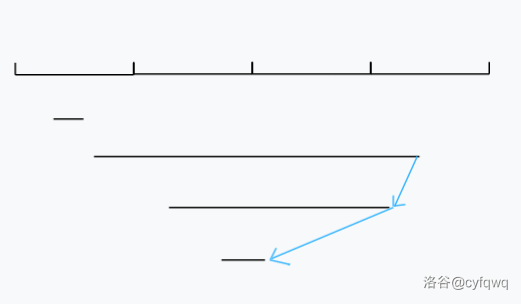
画框部分就多移动了两遍,于是我们考虑奇偶化排序,也就是若左端点所在块相等,则若为奇数块,则按右端点升序排序;否则按右端点降序排序。
代码如下:
return b[l] != b[x.l] ? l < x.l : (r == x.r ? 0 : (b[l] & 1) ^ (r < x.l));此时排序情况如下,很明显减少了一倍的移动量。
时间复杂度为 。
块长一般取 。
特别地,在一般的题里, 与 是同阶的,如果 的值域无法用数组存下,那就需要离散化。
接着便是一堆例题。
SP3267 & P1972
题目大意:每次询问求区间 内的权值种数。
题目的关键在于 和 两个函数。
对于一个数 ,在它刚进入区间 时,那么 出现的个数加 ,若它之前未出现过,代表种数多 。
同理,在它刚离开区间 时, 出现的个数减 ,若现在其个数为 ,代表种数少 。
两个函数代码如下:
inline void add(int x) { sum += !cnt[x]++; }
inline void del(int x) { sum -= !--cnt[x]; }
PS:P1972 需要卡常,莫队并非正解,但卡的过去
#include<bits/stdc++.h>
#define int long long
using namespace std;
const int N = 1e6 + 5;
int n, m, c[N], bl, b[N], sum = 0, cnt[N], ans[N];
struct node {
  int l, r, id;
  bool operator < (const node &x) const {
    if(b[l] != b[x.l]) { return b[l] < b[x.l]; }
    return r < x.r;
  }
} a[N];
inline void add(int x) { sum += !cnt[x]++; }
inline void del(int x) { sum -= !--cnt[x]; }
signed main() {
  ios::sync_with_stdio(0);
  cin.tie(0), cout.tie(0);
  cin >> n;
  bl = sqrt(n + 1);
  for(int i = 1; i <= n; i++) {
    cin >> c[i];
    b[i] = (i - 1) / bl + 1;
  }
  cin >> m;
  for(int i = 1; i <= m; i++) {
    cin >> a[i].l >> a[i].r;
    a[i].id = i;
  }
  sort(a + 1, a + m + 1);
  int l = 1, r = 0;
  for(int i = 1; i <= m; i++) {
    while(l > a[i].l) { add(c[--l]); }
    while(r < a[i].r) { add(c[++r]); }
    while(l < a[i].l) { del(c[l++]); }
    while(r > a[i].r) { del(c[r--]); }
    ans[a[i].id] = sum;
  }
  for(int i = 1; i <= m; i++) {
    cout << ans[i] << '\n';
  }
  return 0;
}
P1494
题目链接:link。
题目大意:令区间 内 出现了 次,求 。
同样是两个函数,但很好处理,每次 加或减 即可。
P2709
题目链接:link。
题目大意:求 。
对于每次移动, 加或减 。
CF1000F
题目链接:link。
题目大意:求任意一个 的 。
用一个栈来存满足条件的 。
#include<bits/stdc++.h>
using namespace std;
const int N = 1e6 + 5;
int n, m, a[N], bl, sum = 0, cnt[N], ans[N];
int b[N], c[N], tot;
struct node {
  int l, r, b, id;
  bool operator < (const node &x) const {
    if(b != x.b) { return b < x.b; }
    return r == x.r ? 0 : (b & 1) ^ (r < x.r);
  }
} q[N];
inline void add(int x) {
  ++cnt[x];
  if(cnt[x] == 1) {
    ++sum;
    b[++tot] = x;
    c[x] = tot;
  }
  if(cnt[x] == 2) {
    --sum;
    b[c[x]] = b[tot];
    c[b[tot]] = c[x];
    b[tot--] = c[x] = 0;
  }
}
inline void del(int x) {
  --cnt[x];
  if(cnt[x] == 1) {
    ++sum;
    b[++tot] = x;
    c[x] = tot;
  }
  if(cnt[x] == 0) {
    --sum;
    b[c[x]] = b[tot];
    c[b[tot]] = c[x];
    b[tot--] = c[x] = 0;
  }
}
signed main() {
  ios::sync_with_stdio(0);
  cin.tie(0), cout.tie(0);
  cin >> n;
  bl = sqrt(n);
  for(int i = 1; i <= n; i++) {
    cin >> a[i];
  }
  cin >> m;
  for(int i = 1; i <= m; i++) {
    cin >> q[i].l >> q[i].r;
    q[i].b = q[i].l / bl, q[i].id = i;
  }
  sort(q + 1, q + m + 1);
  int l = 1, r = 0;
  for(int i = 1; i <= m; i++) {
    while(l > q[i].l) { add(a[--l]); }
    while(r < q[i].r) { add(a[++r]); }
    while(l < q[i].l) { del(a[l++]); }
    while(r > q[i].r) { del(a[r--]); }
    if(sum) {
      ans[q[i].id] = b[tot];
    }
  }
  for(int i = 1; i <= m; i++) {
    cout << ans[i] << '\n';
  }
  return 0;
}
CF220B
题目链接:link。
题目大意:有多少个 满足 。
对于 函数,如果 后 ,满足条件,答案加 ;如果 ,代表这个 本来满足条件,现在不满足了,答案减 。 函数同理。
两个函数代码如下:
inline void add(int x) {
  if(x > n) { return ; }
  ++cnt[x];
  if(cnt[x] == x) { ++sum; }
  if(cnt[x] == x + 1) { --sum; }
}
inline void del(int x) {
  if(x > n) { return ; }
  --cnt[x];
  if(cnt[x] == x) { ++sum; }
  if(cnt[x] == x - 1) { --sum; }
}
Part 3. 树上莫队
对于树上路径问题,通常是用欧拉序转换为线性,还要加上 LCA,所以代码通常会很长。对于子树的问题,通常用 dfn 序转换。
欧拉序:在第一次遍历到 时放入欧拉序,在遍历完其子树后再放入一次欧拉序。所以欧拉序数组需要多开一倍。
SP10707
题目链接:link。
题目大意:求 到 的简单路径的权值种数,。
首先 需要离散化。
既然是求路径不难想到 LCA 来 处理,在询问前先用一遍 dfs 来求出欧拉序并标记每个节点在欧拉序中的两个位置。
而在询问时的 就要转换为它们在欧拉序中的位置。
如果 是 的祖先节点或者 是 的祖先节点,那就存入它们两个第一次入欧拉序的位置(注意要满足 );否则存入 第二次入欧拉序的位置和 第一次入欧拉序的位置。
至于求 LCA,由于我不会树剖,所以就用普通的倍增求就可以了。
#include<bits/stdc++.h>
#define int long long
using namespace std;
const int N = 1e5 + 5;
int n, m, bl, a[N], c[N], cnt[N], ans[N], sum;
int f[N][20], dep[N], eu[N], tot, s[N], t[N];
bool vis[N];
vector<int> e[N];
struct node {
  int l, r, id, lca;
  bool operator < (const node &x) const {
    return l / bl != x.l / bl ? l / bl < x.l / bl : r > x.r;
  }
} q[N];
inline void dfs(int x, int fa) {
  dep[x] = dep[fa] + 1, eu[s[x] = ++tot] = x;
  f[x][0] = fa;
  for(int i = 1; i < 20; i++) {
    f[x][i] = f[f[x][i - 1]][i - 1];
  }
  for(int i : e[x]) {
    if(i == fa) { continue; }
    dfs(i, x);
  }
  eu[t[x] = ++tot] = x;
}
inline int lca(int x, int y) {
  if(x == y) { return x; }
  if(dep[x] < dep[y]) { swap(x, y); }
  for(int i = 19; i >= 0; i--) {
    while(dep[f[x][i]] >= dep[y]) {
      x = f[x][i];
    }
    if(x == y) { return x; }
  }
  for(int i = 19; i >= 0; i--) {
    if(f[x][i] != f[y][i]) {
      x = f[x][i], y = f[y][i];
    }
  }
  return f[x][0];
}
inline void solve(int x) {
  if(!(vis[x] ^= 1) && !--cnt[a[x]]) { --sum; }
  if(vis[x] && !cnt[a[x]]++) { ++sum; }
}
signed main() {
  ios::sync_with_stdio(0);
  cin.tie(0), cout.tie(0);
  cin >> n >> m;
  bl = sqrt(m);
  for(int i = 1; i <= n; i++) {
    cin >> a[i];
    c[i] = a[i];
  }
  sort(c + 1, c + n + 1);
  int tmp = unique(c + 1, c + n + 1) - c - 1;
  for(int i = 1; i <= n; i++) {
    a[i] = lower_bound(c + 1, c + tmp + 1, a[i]) - c;
  }
  for(int i = 1; i < n; i++) {
    int u, v;
    cin >> u >> v;
    e[u].push_back(v);
    e[v].push_back(u);
  }
  dfs(1, 0);
  for(int i = 1, x, y; i <= m; i++) {
    cin >> x >> y;
    q[i].id = i;
    int tmp = lca(x, y);
    if(tmp == x || tmp == y) {
      if(s[x] > s[y]) { swap(x, y); }
      q[i].l = s[x], q[i].r = s[y];
    } else {
      if(s[x] > t[y]) { swap(x, y); }
      q[i].l = t[x], q[i].r = s[y];
      q[i].lca = tmp;
    }
  }
  sort(q + 1, q + m + 1);
  int l = 1, r = 0;
  for(int i = 1; i <= m; i++) {
    while(l > q[i].l) { solve(eu[--l]); }
    while(r < q[i].r) { solve(eu[++r]); }
    while(l < q[i].l) { solve(eu[l++]); }
    while(r > q[i].r) { solve(eu[r--]); }
    if(q[i].lca) { solve(q[i].lca); }
    ans[q[i].id] = sum;
    if(q[i].lca) { solve(q[i].lca); }
  }
  for(int i = 1; i <= m; i++) {
    cout << ans[i] << '\n';
  }
  return 0;
}
CF375D
题目链接:link
题目大意:求 的子树内出现次数大于等于 的权值种数有多少。
想到用 dfn 序转换为线性,对于节点 的子树,其左端点为其 dfn 值,右端点为遍历完它的子树后时的 dfn 值。
#include<bits/stdc++.h>
using namespace std;
const int N = 1e5 + 5;
struct node {
  int x, id, dfn, r;
  bool operator < (const node &p) const {
    return dfn < p.dfn;
  }
} a[N];
int n, m, bl, b[N], cnt[N], sum[N], ans[N], tot;
vector<int> e[N];
struct node1 {
  int l, r, k, id;
  bool operator < (const node1 &x) const {
    return b[l] != b[x.l] ? b[l] < b[x.l] : r < x.r;
  }
} q[N];
inline void dfs(int x, int fa) {
  a[x].dfn = ++tot;
  for(int i : e[x]) {
    if(i == fa) { continue; }
    dfs(i, x);
  }
  a[x].r = tot;
}
inline void add(int x) { ++sum[++cnt[x]]; }
inline void del(int x) { --sum[cnt[x]--]; }
int main() {
  ios::sync_with_stdio(0);
  cin.tie(0), cout.tie(0);
  cin >> n >> m;
  bl = sqrt(n);
  for(int i = 1; i <= n; i++) {
    cin >> a[i].x;
    a[i].id = i;
    b[i] = (i - 1) / bl + 1;
  }
  for(int i = 1; i < n; i++) {
    int u, v;
    cin >> u >> v;
    e[u].push_back(v);
    e[v].push_back(u);
  }
  dfs(1, 0);
  for(int i = 1; i <= m; i++) {
    int u, k;
    cin >> u >> k;
    q[i] = {a[u].dfn, a[u].r, k, i};
  }
  sort(a + 1, a + n + 1);
  sort(q + 1, q + m + 1);
  int l = 1, r = 0;
  for(int i = 1; i <= m; i++) {
    while(l > q[i].l) { add(a[--l].x); }
    while(r < q[i].r) { add(a[++r].x); }
    while(l < q[i].l) { del(a[l++].x); }
    while(r > q[i].r) { del(a[r--].x); }
    ans[q[i].id] = sum[q[i].k];
  }
  for(int i = 1; i <= m; i++) {
    cout << ans[i] << '\n';
  }
  return 0;
}
Part 4. 带修莫队
我们让莫队修改,可以强行加上一维时间维表示此时修改的次数,所以 除了原本的 变化,还能变为 。
转移同样是 ,排序则要多一个关键字。代码如下:
return b[l] != b[x.l] ? l < x.l : (b[r] != b[x.r] ? r < x.r : t < x.t);但是块长就不是 了,而是 才是最优。
下面是 OI-wiki 上给的时间复杂度证明。
我们设序列长为 , 个询问, 个修改。 带修莫队排序的第二关键字是右端点所在块编号,不同于普通莫队。 想一想,如果不把右端点分块:
- 乱序的右端点对于每个询问会移动 次。
- 有序的右端点会带来乱序的时间,每次询问会移动 次。
无论哪一种情况,带来的时间开销都无法接受。 接下来分析时间复杂度。 设块长为 ,则有 个块。对于块 和块 ,记有 个询问的左端点位于块 ,右端点位于块 。 每「组」左右端点不换块的询问 ,端点每次移动 次,时间单调递增,。 左右端点换块的时间忽略不计。 表示一下就是:
考虑求导求此式极小值。设 。那 。 得 。 也就是当块长取 时有最优时间复杂度 。 常说的 便是把 当做同数量级的时间复杂度。 实际操作中还是推荐设定 为块长。
P1903 & UVA12345
题目大意:两种询问:
-
Q l r:查询 内权值种数。 -
R p c:将 修改为 。
板子题,不过是加了修改 的两个循环,代码如下:
while(t < q[i].t) {
  ++t;
  if(q1[t].p >= l && q1[t].p <= r) {
    del(a[q1[t].p]), add(q1[t].c);
  }
  swap(a[q1[t].p], q1[t].c);
}
while(t > q[i].t) {
  if(q1[t].p >= l && q1[t].p <= r) {
    del(a[q1[t].p]), add(q1[t].c);
  }
  swap(a[q1[t].p], q1[t].c);
  --t;
}
SP30906
题目链接:link。
题目大意:将上一题的查询改为 内恰好出现 次的权值种数。
修改一下 和 两个函数即可。
SP32952
题目链接:link。
题目大意:查询操作为:令 到 的简单路径权值 出现个数为 ,求 。
树上带修莫队,求一下欧拉序转换为线性再用带修莫队就可以了。
#include<bits/stdc++.h>
#define int long long
using namespace std;
const int N = 1e5 + 5;
int n, m, a[N], bl, b[N], cnt[N];
int tot1, tot2, vis[N], sum, ans[N];
struct node {
  int l, r, t, lca, id;
  bool operator < (const node &x) const {
    return b[l] != b[x.l] ? b[l] < b[x.l] : (b[r] != b[x.r] ? b[r] < b[x.r] : t < x.t);
  }
} q[N];
struct node1 {
  int p, c;
} q1[N];
int dep[N], eu[N << 1], tot, f[N][25], s[N], t[N];
vector<int> e[N];
inline void dfs(int x, int fa) {
  dep[x] = dep[fa] + 1, eu[s[x] = ++tot] = x;
  f[x][0] = fa;
  for(int i = 1; i <= 20; i++) {
    f[x][i] = f[f[x][i - 1]][i - 1];
  }
  for(int i : e[x]) {
    if(i == fa) { continue; }
    dfs(i, x);
  }
  eu[t[x] = ++tot] = x;
}
inline int lca(int x, int y) {
  if(x == y) { return x; }
  if(dep[x] < dep[y]) { swap(x, y); }
  for(int i = 20; i >= 0; i--) {
    while(dep[f[x][i]] >= dep[y]) {
      x = f[x][i];
    }
    if(x == y) { return x; }
  }
  for(int i = 19; i >= 0; i--) {
    if(f[x][i] != f[y][i]) {
      x = f[x][i], y = f[y][i];
    }
  }
  return f[x][0];
}
inline void add(int x) {
  sum -= cnt[x] * (cnt[x] - 1) / 2;
  ++cnt[x];
  sum += cnt[x] * (cnt[x] - 1) / 2;
}
inline void del(int x) {
  sum -= cnt[x] * (cnt[x] - 1) / 2;
  --cnt[x];
  sum += cnt[x] * (cnt[x] - 1) / 2;
}
inline void solve(int x) {
  (vis[x] ^= 1) ? add(a[x]) : del(a[x]);
}
signed main() {
  ios::sync_with_stdio(0);
  cin.tie(0), cout.tie(0);
  cin >> n >> m;
  bl = pow(n * 2, 2.0 / 3);
  for(int i = 1; i <= n; i++) {
    cin >> a[i];
  }
  for(int i = 1; i <= (n << 1); i++) {
    b[i] = (i - 1) / bl + 1;
  }
  for(int i = 1; i < n; i++) {
    int u, v;
    cin >> u >> v;
    ++u, ++v;
    e[u].push_back(v);
    e[v].push_back(u);
  }
  dfs(1, 0);
  for(int i = 1; i <= m; i++) {
    int op, x, y;
    cin >> op >> x >> y;
    if(op == 1) { q1[++tot2] = {x + 1, y}; }
    else {
      ++x, ++y, ++tot1;
      if(s[x] > s[y]) { swap(x, y); }
      int tmp = lca(x, y);
      if(tmp == x) {
        q[tot1].l = s[x];
      } else {
        q[tot1].l = t[x], q[tot1].lca = tmp;
      }
      q[tot1].r = s[y], q[tot1].id = tot1, q[tot1].t = tot2;
    }
  }
  sort(q + 1, q + tot1 + 1);
  int l = 1, r = 0, t = 0;
  for(int i = 1; i <= tot1; i++) {
    while(l > q[i].l) { solve(eu[--l]); }
    while(r < q[i].r) { solve(eu[++r]); }
    while(l < q[i].l) { solve(eu[l++]); }
    while(r > q[i].r) { solve(eu[r--]); }
    while(t < q[i].t) {
      ++t;
      if(vis[q1[t].p]) {
        del(a[q1[t].p]), add(q1[t].c);
      }
      swap(a[q1[t].p], q1[t].c);
    }
    while(t > q[i].t) {
      if(vis[q1[t].p]) {
        del(a[q1[t].p]), add(q1[t].c);
      }
      swap(a[q1[t].p], q1[t].c);
      --t;
    }
    if(q[i].lca) { solve(q[i].lca); }
    ans[q[i].id] = sum;
    if(q[i].lca) { solve(q[i].lca); }
  }
  for(int i = 1; i <= tot1; i++) {
    cout << ans[i] << '\n';
  }
  return 0;
}
CF940F
题目链接:link。
题目大意:求 到 的简单路径上由每个节点组成的集合的 mex 值。
先离散化 和修改的值,再暴力求 mex。
#include<bits/stdc++.h>
using namespace std;
const int N = 2e5 + 5;
int n, m, a[N], bl, b[N], cnt[N], sum[N], ans[N], tot1, tot2;
int c[N], tot;
struct node {
  int l, r, id, t;
  bool operator < (const node &x) const {
    return b[l] != b[x.l] ? l < x.l : (b[r] != b[x.r] ? r < x.r : t < x.t);
  }
} q[N];
struct node1 {
  int p, c;
} q1[N];
inline void add(int x) {
  --sum[cnt[x]];
  ++sum[++cnt[x]];
}
inline void del(int x) {
  --sum[cnt[x]];
  ++sum[--cnt[x]];
}
inline void solve(int x, int l, int r) {
  if(q1[x].p >= l && q1[x].p <= r) {
    del(a[q1[x].p]), add(q1[x].c);
  }
  swap(a[q1[x].p], q1[x].c);
}
int main() {
  ios::sync_with_stdio(0);
  cin.tie(0), cout.tie(0);
  cin >> n >> m;
  bl = pow(n, 2.0 / 3);
  for(int i = 1; i <= n; i++) {
    cin >> a[i];
    c[++tot] = a[i];
    b[i] = (i - 1) / bl + 1;
  }
  for(int i = 1; i <= m; i++) {
    int opt, l, r;
    cin >> opt >> l >> r;
    if(opt == 1) {
      q[++tot1] = {l, r, tot1, tot2};
    } else {
      q1[++tot2] = {l, r};
      c[++tot] = r;
    }
  }
  sort(c + 1, c + tot + 1);
  tot = unique(c + 1, c + tot + 1) - c - 1;
  for(int i = 1; i <= n; i++) {
    a[i] = lower_bound(c + 1, c + tot + 1, a[i]) - c;
  }
  for(int i = 1; i <= tot2; i++) {
    q1[i].c = lower_bound(c + 1, c + tot + 1, q1[i].c) - c;
  }
  sort(q + 1, q + tot1 + 1);
  int l = 1, r = 0, t = 0;
  for(int i = 1; i <= tot1; i++) {
    while(l > q[i].l) { add(a[--l]); }
    while(r < q[i].r) { add(a[++r]); }
    while(l < q[i].l) { del(a[l++]); }
    while(r > q[i].r) { del(a[r--]); }
    while(t < q[i].t) { solve(++t, q[i].l, q[i].r); }
    while(t > q[i].t) { solve(t--, q[i].l, q[i].r); }
    ans[q[i].id] = 1;
    while(sum[ans[q[i].id]]) {
      ++ans[q[i].id];
    }
  }
  for(int i = 1; i <= tot1; i++) {
    cout << ans[i] << '\n';
  }
  return 0;
}
P4074
题目链接:link。
题目大意:令 到 的简单路径中权值 出现了 次,求:。
板子题,修改 和 两个函数就行了。
代码:
#include<bits/stdc++.h>
#define int long long
using namespace std;
const int N = 2e5 + 5;
int s[N], t[N], c1[N], ans[N], sum;
int dep[N], f[N][25], eu[N], v[N], w[N];
int bl, tot, n, m, Q;
int b[N], c[N], cnt[N];
bool vis[N];
vector<int> e[N];
int tot1 = 0, tot2 = 0;
struct query {
  int l, r, t, id;
  bool operator < (const query &x) const {
    return b[l] != b[x.l] ? l < x.l : (b[r] != b[x.r] ? r < x.r : t < x.t);
  }
} q[N], q1[N];
inline void dfs(int x, int fa) {
  dep[x] = dep[fa] + 1;
  eu[s[x] = ++tot] = x;
  f[x][0] = fa;
  for(int i = 1; i <= 20; i++) {
    f[x][i] = f[f[x][i - 1]][i - 1];
  }
  for(int i : e[x]) {
    if(i == fa) { continue; }
    dfs(i, x);
  }
  eu[t[x] = ++tot] = x;
}
inline int lca(int x, int y) {
  if(x == y) { return x; }
  if(dep[x] < dep[y]) { swap(x, y); }
  for(int i = 19; i >= 0; i--) {
    while(dep[f[x][i]] >= dep[y]) {
      x = f[x][i];
    }
    if(x == y) { return x; }
  }
  for(int i = 19; i >= 0; i--) {
    if(f[x][i] != f[y][i]) {
      x = f[x][i], y = f[y][i];
    }
  }
  return f[x][0];
}
inline void solve(int x) {
  if(vis[x]) {
    sum -= v[c[x]] * w[cnt[c[x]]--];
  } else {
    sum += v[c[x]] * w[++cnt[c[x]]];
  }
  vis[x] ^= 1;
}
inline void modify(int x, int t) {
  if(vis[x]) {
    solve(x);
    c[x] = t;
    solve(x);
  } else {
    c[x] = t;
  }
}
signed main() {
  ios::sync_with_stdio(0);
  cin.tie(0), cout.tie(0);
  cin >> n >> m >> Q;
  for(int i = 1; i <= m; i++) {
    cin >> v[i];
  }
  for(int i = 1; i <= n; i++) {
    cin >> w[i];
  }
  for(int i = 1; i < n; i++) {
    int x, y;
    cin >> x >> y;
    e[x].push_back(y);
    e[y].push_back(x);
  }
  for(int i = 1; i <= n; i++) {
    cin >> c1[i];
    c[i] = c1[i];
  }
  dfs(1, 0);
  bl = pow(tot, 2.0 / 3);
  for(int i = 1; i <= (n << 1); i++) {
    b[i] = (i - 1) / bl + 1;
  }
  while(Q--) {
    int opt, x, y;
    cin >> opt >> x >> y;
    if(!opt) {
      q1[++tot2].l = x;
      q1[tot2].r = c1[x];
      c1[x] = q1[tot2].t = y;
    } else {
      if(s[x] > s[y]) swap(x, y);
      int tmp = lca(x, y);
      q[++tot1] = {tmp == x ? s[x] : t[x], s[y], tot2, tot1};
    }
  }
  sort(q + 1, q + tot1 + 1);
  int l = 1, r = 0, t = 0;
  for(int i = 1; i <= tot1; i++) {
    while(l > q[i].l) { solve(eu[--l]); }
    while(r < q[i].r) { solve(eu[++r]); }
    while(l < q[i].l) { solve(eu[l++]); }
    while(r > q[i].r) { solve(eu[r--]); }
    while(t < q[i].t) { ++t, modify(q1[t].l, q1[t].t); }
    while(t > q[i].t) { modify(q1[t].l, q1[t].r), --t; }
    int x = eu[l], y = eu[r];
    int tmp = lca(x, y);
    if(x != tmp && y != tmp) {
      solve(tmp);
      ans[q[i].id] = sum;
      solve(tmp);
    } else { ans[q[i].id] = sum; }
  }
  for(int i = 1; i <= tot1; i++) {
    cout << ans[i] << '\n';
  }
  return 0;
}